





















How to Remove Moldy Smell From Rooms Without Masking the Odor
Learn how to remove moldy smell from rooms for good without masking it. Discover real solutions and when to call professional mold removal services.

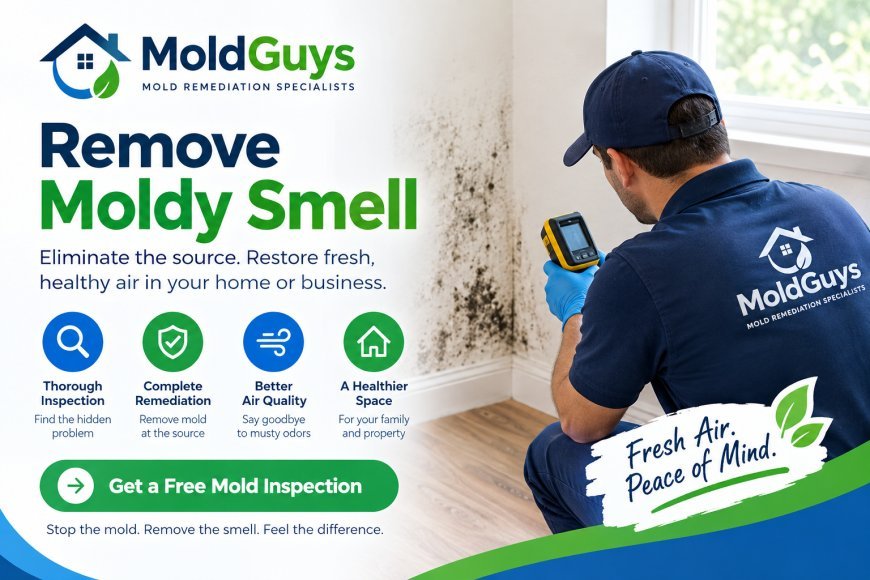
The moment a room develops a persistent damp and earthy smell, most people reach for an air freshener, a scented candle, or a deodorizing spray. These products do exactly what they promise for a brief period. The smell fades temporarily, the room feels cleaner, and then within hours or days the odor returns, sometimes noticeably stronger than before. This cycle repeats because the products being used are treating the symptom while leaving the cause entirely untouched. Knowing how to truly remove moldy smell from a room means understanding where the odor originates, why it persists through every scented product applied over it, and what approach actually reaches the biological source producing the compounds that create it. This guide walks through the real causes of mold odor in rooms, the practical methods that eliminate it at the source, and the circumstances where professional help is the most direct and reliable path to a result that genuinely holds.
Why Masking Never Solves the Problem
The distinction between masking an odor and eliminating it is not subtle. It is the difference between two entirely different outcomes. Masking adds a competing scent to the room atmosphere or temporarily absorbs some of the odor compounds circulating in the air. The source of those compounds continues producing them without any interruption. The moment the masking product has dissipated, the underlying odor reasserts itself because the source never changed.
This is why rooms with a persistent mold smell often seem to get harder to manage over time even when they receive frequent applications of deodorizing products. The colony producing the odor is active and growing. Masking products cover it intermittently. Between each application the colony expands, consumes more material, releases more volatile compounds, and produces more spores. Each new spray or candle is working against an increasingly established source, which explains why the odor cycle often becomes progressively worse rather than gradually improving.
The only response that genuinely eliminates the smell is one that addresses the biological source generating it. Once that source is fully eliminated and the affected materials are properly cleaned and dried to acceptable levels, the production of odor-generating compounds stops. What remains is only residual odor absorbed by soft furnishings and room surfaces, which clears naturally with ventilation and absorption over a period of days to weeks. Understanding this distinction is the starting point for every effective approach to room mold odor.
What Actually Creates the Odor
The smell associated with mold is produced by a class of compounds called microbial volatile organic compounds, commonly abbreviated as MVOCs. These are gases that active mold colonies release during their metabolic process of breaking down the organic material they feed on. The earthy, damp, and stale character of the smell varies slightly by species and by what material the colony is consuming, but it is recognizable across virtually all common household mold types.
What makes MVOCs significant for odor removal is that they are produced by active metabolic activity. A dormant spore on a dry surface produces negligible amounts of these compounds. An actively growing and metabolically engaged colony produces them continuously and in proportion to the size and activity level of the growth. This is why the intensity of room odor correlates with how active the colony is rather than simply with how large a visible patch may appear on any surface. A well-established hidden colony inside a wall cavity can produce far more odor than a small surface patch that has just begun to colonize.
The practical implication is the same regardless of the location or species: permanently reducing or eliminating the odor requires reducing or eliminating the colony's active metabolism. Products that absorb or overpower the odor compounds already in the air have no effect on that metabolism. Only removing the growth and resolving the moisture condition sustaining it eliminates the production of compounds at the source.
How to Find the Source Before Treating Anything
Attempting to remove moldy smell from a room without first identifying the source of the growth producing it is one of the most common reasons odor problems persist through repeated treatment attempts. Cleaning visible patches and running ventilation both help after the source is addressed. Before it is addressed, they change nothing about the odor-generating process and produce only temporary improvements at best.
Locating the source begins with careful and systematic observation. The smell is consistently strongest closest to the active growth. Moving through the room slowly and pausing in different zones allows you to identify where the odor intensifies. That zone is where the investigation should focus first.
Within that zone, examine the areas where mold most commonly establishes. Check baseboard sections and wall surfaces near the floor where moisture tends to accumulate. Inspect the wall area around and behind any plumbing penetrations. Look at the ceiling surface in rooms below bathrooms or any roof area with compromised flashing. Open closets and storage areas within the zone and examine the wall surfaces and ceiling inside them. Look for paint that is bubbling or peeling without an external cause, for drywall surfaces with discoloration that has appeared independently, for grout lines that have darkened significantly, and for any wall section that responds with even slight softness to gentle pressure.
When no visible growth appears despite a clearly concentrated odor in a specific area, the source is almost certainly located inside a wall cavity, above a ceiling surface, or under a section of flooring. At this point, a professional diagnostic assessment becomes the most efficient next step because identifying hidden sources without professional equipment typically requires opening building materials and inspecting cavities without knowing exactly what will be found.
How to Remove Moldy Smell From Different Room Types
Living Rooms and Bedrooms
Living rooms and bedrooms typically develop mold odor from sources located at or near the perimeter walls rather than from central room surfaces. In humid climates like Southwest Florida, exterior walls are particularly susceptible to moisture accumulation within the wall assembly when insulation is inadequate or when the exterior building envelope has any point of compromise.
Using a handheld moisture meter to test the moisture content of drywall along the perimeter walls, especially in corners and at the base of walls near the floor, reveals whether elevated moisture is present in the material. Readings above acceptable levels in drywall confirm that conditions favorable to active colony growth exist within the material even without visible surface evidence.
For any identified surface growth on nonporous surfaces in these rooms including sealed wood trim and painted walls with intact paint layers, an antimicrobial cleaner applied thoroughly and allowed to penetrate before wiping is appropriate. Drywall where mold has penetrated through the paper facing into the gypsum core requires removal and replacement rather than surface cleaning because cleaning only eliminates what is visible while leaving the embedded filaments and the conditions sustaining the odor intact.
Bathrooms
Bathrooms carry a disproportionately high mold odor risk because steam from daily showers creates repeated moisture events on wall surfaces, ceiling materials, grout lines, caulking joints, and the interior of any cabinet adjacent to plumbing connections. The odor in a bathroom is typically most noticeable during and immediately after showers when elevated temperatures activate the volatile compounds released by colonies on warm and freshly moistened surfaces.
Treating bathroom odor at its source means inspecting every possible growth location before cleaning anything. Grout lines and caulking at the tub and shower perimeter, the ceiling surface above the shower zone, the wall sections immediately around the showerhead, and the area beneath the toilet base are the most consistent sources in bathroom environments.
For tile and other nonporous surfaces, an antimicrobial cleaner worked into grout lines with a stiff brush and allowed to sit for several minutes before rinsing produces better penetration than general surface wiping. For caulking that has been penetrated by mold below its surface layer, removal and replacement of the caulk after cleaning and drying the substrate beneath it is the reliable approach. Running the bathroom exhaust fan during every shower and for at least 20 minutes after the water stops is the single most impactful environmental control available for preventing bathroom colonies from sustaining the activity that generates the smell.
Kitchens
Kitchen mold odor most commonly originates from confined spaces that combine moisture and organic material with limited air circulation. The cabinet beneath the kitchen sink, the area behind and beneath the refrigerator where coil condensation creates persistent moisture on the floor surface, the zone around and behind the dishwasher, and the interior of any cabinet adjacent to a garbage disposal or waste line connection are the most frequent kitchen sources.
Inspect each of these areas systematically for visible growth and moisture evidence. The undersink cabinet interior is particularly vulnerable if any slow drip has existed at supply line fittings or the drain connection, even a very minor one that produced no visible water pooling. Clean any identified growth with an antimicrobial solution appropriate for the surface type, dry the interior of the cabinet thoroughly, repair any active moisture source, and improve airflow into the cabinet by leaving the door slightly open during dry periods while the space recovers.
Basements and Below Grade Areas
Basements carry the highest mold odor risk of any room type because below grade moisture pressure from surrounding soil, combined with minimal natural airflow and consistently elevated ambient humidity, creates conditions where active colonies can establish on virtually any organic surface including stored cardboard, fabric items, wood framing, and paper-faced drywall.
The critical dimension of basement odor that many homeowners underestimate is that it does not stay in the basement. Volatile compounds from active basement growth travel upward through unsealed floor penetrations, the floor framing assembly, and the HVAC return air pathway and reach every living room above the basement level. Attempting to remove moldy smell from a main level room without identifying and addressing a basement source will always fail because the source below continues producing compounds that rise into the living space regardless of what is done to the surfaces above.
Dehumidification is the most impactful single intervention in a basement mold environment. A dedicated dehumidifier maintaining relative humidity below 50 percent removes the ambient moisture that keeps existing colonies metabolically active and prevents new ones from establishing on any surface in the space.
Closets and Storage Areas
Closets are consistently overlooked as mold odor sources because they receive infrequent inspection, have virtually no natural airflow, and are typically filled with organic materials including clothing, cardboard boxes, and paper goods that provide both food source and surface area for colony growth. Active growth inside a closet produces odor that permeates the room it opens into continuously and is often attributed to the room itself rather than to the enclosed storage space within it.
Empty the closet completely and inspect all interior surfaces including the ceiling, the upper wall corners, the section of wall directly behind where items are normally stored, and the floor surface particularly near exterior-facing walls. Assess every stored item. Cardboard boxes, paper materials, and fabric items showing visible growth or carrying significant absorbed odor are generally best replaced rather than cleaned, as the volatile compounds penetrate deeply into these materials and thorough effective cleaning is not practical.
Natural Absorption After the Source Is Addressed
Once the active source of the room odor has been located and fully treated, natural absorption methods are genuinely effective for clearing the residual compounds that remain in the room air and in soft materials. The important distinction is sequence. These methods work after the source is gone. Applied while the source remains active, they mask the odor temporarily and create the same false sense of progress as any other masking approach.
Activated charcoal in open containers placed in the treated room absorbs volatile organic compounds from the air with high effectiveness. Replace or reactivate the charcoal every 30 to 60 days for consistent results. Open containers of baking soda absorb residual odor in enclosed spaces including closets and cabinets. White vinegar in shallow open dishes draws compounds from the surrounding room air over a 24 to 48 hour period.
Cross ventilation, achieved by opening windows on opposite sides of the room or home to create a directional air current, replaces the indoor air volume with fresh outdoor air faster than passive exchange alone. In the Sarasota and Southwest Florida area, the morning hours before ambient outdoor humidity rises with afternoon temperatures provide the best window for effective cross ventilation without introducing additional moisture into the space.
Running an air purifier equipped with both a true HEPA filter and an activated carbon stage in the treated room for several days after the source is addressed captures residual spores and the volatile compounds that carry the odor. This is one of the most practical and effective tools for restoring clean indoor air quality in the days following a successful source treatment.
When DIY Efforts Are Not Reaching the Problem
Persistent odor that does not resolve after thorough surface cleaning of all visible growth is a consistent indicator that the active source is in a location that cannot be reached through surface treatment. This is the situation where professional assessment produces results that personal investigation and cleaning cannot.
Qualified mold removal experts approach a room odor problem where no visible surface source can be identified as a diagnostic challenge requiring specialized equipment before it becomes a cleaning challenge requiring removal and treatment. The tools they bring, including air sampling, thermal imaging, and calibrated moisture meters, locate hidden colonies with a specificity that makes the remediation scope defined and targeted rather than open-ended.
When homeowners search for mold removal services near me after personal treatment attempts have not resolved a persistent room odor, the diagnostic assessment that professional teams perform typically locates the source within a single inspection visit. That precision means remediation work can begin at the correct location with the correct scope from the first day of active treatment rather than proceeding by elimination and guesswork.
Mold removal experts who have worked extensively in Florida's subtropical climate also understand the specific growth patterns that this regional environment produces, including how quickly active colonies can expand in warm humid conditions and which building material combinations are most vulnerable to hidden colony development in this climate. That local knowledge shapes how assessments are conducted and how remediation plans are designed in ways that generic protocols do not.
What Professional Mold Removal Services Do Differently
Professional mold removal services treat a persistent room odor as a source location problem before a cleaning problem. Their assessment tools provide information about what is happening inside building materials, within wall cavities, and in the air quality of the affected space that no visual or sensory inspection can supply independently.
Air sampling measures spore concentrations in the room atmosphere and compares them against concentrations in adjacent spaces and outdoor baseline samples. Elevated concentrations in a specific room without a visible surface source confirm active hidden growth within that zone and establish its approximate location. Calibrated moisture meters identify the specific material locations within that zone where moisture content is elevated enough to support active metabolism and therefore active odor production.
Once the source is confirmed and located, remediation eliminates it completely. Affected materials are removed where surface cleaning is insufficient to reach the embedded colony. The work area is contained to prevent spore spread during the disturbance phase. Building materials are dried to verified acceptable levels using industrial drying equipment. Post remediation air sampling then confirms that MVOC and spore concentrations have returned to baseline levels before the project is considered complete. Professional mold removal services operating at this standard provide a verifiable result rather than a temporarily improved smell.
The Role of Mold Inspection in Targeting Hidden Sources
A professional mold inspection is the most precise tool available for identifying the source of room odor that has not been located through accessible surface inspection. It goes beyond the sensory and visual investigation a homeowner can conduct by applying air sampling, surface sampling, and moisture mapping systematically across the full room and adjacent areas.
The data from a mold inspection transforms an unexplained room odor into a defined and targeted problem. The air sampling results show where spore concentrations are elevated within the room and provide an objective basis for determining where active growth is occurring. The moisture mapping results identify the specific building materials where the conditions for active colony growth exist. Together this data determines exactly where remediation work needs to focus, which materials need to be opened or removed, and where containment boundaries must be established to prevent spore spread during the active treatment phase.
Searching for mold removal services near me that include this level of diagnostic assessment in their standard inspection process is the most important criterion for identifying a company whose results will be complete and verifiable rather than partial and uncertain.
Preventing Room Odor From Returning
After the active source has been fully resolved and the room odor has cleared, sustaining the environmental conditions that prevent new colony activity is what keeps the room genuinely clean.
Maintain indoor relative humidity below 50 percent consistently in all rooms that experienced mold activity. A hygrometer placed in moisture prone rooms provides real time information about conditions and allows you to respond with dehumidification or increased air conditioning before humidity reaches the threshold where mold can begin to establish again. In Southwest Florida's climate, maintaining this level consistently typically requires running air conditioning throughout the warm months and supplementing with a portable dehumidifier in any room that air conditioning does not reach efficiently.
Inspect the previously affected room every few months for any returning moisture indicators. Check wall surfaces in the zone where growth was previously found, the condition of any caulking or grout that was treated, and the moisture reading of any material sections that held elevated readings during the treatment phase. Early detection of returning moisture allows intervention before new odor-producing growth has time to establish.
Run exhaust ventilation consistently in any bathroom or kitchen directly adjacent to a room that experienced mold odor. Sustained moisture generated in those spaces travels into adjacent rooms through shared walls and floor assemblies and is frequently the moisture source that originally produced the colony responsible for the room odor.
Conclusion
A room that carries a persistent mold smell is signaling something specific about a biological process occurring somewhere within it or immediately adjacent to it. Air fresheners and scented products cannot address that process. They cover its signal while the underlying source continues without interruption. Genuinely removing the odor means locating the active colony, resolving the moisture condition sustaining it, eliminating the growth completely from the full extent of the affected material, verifying that materials have returned to acceptable dryness, and clearing residual compounds from the room air through active ventilation and natural absorption. When the source is hidden and the odor persists through all accessible cleaning efforts, professional assessment is the tool that finds and resolves it at the level where the smell is actually being generated. The Mold Guys bring over 25 years of experience to mold problems across Southwest and Central Florida, with the equipment and process discipline to locate and eliminate odor sources completely and verifiably. Contact The Mold Guys today for an assessment and get a result you can confirm rather than a smell you need to keep covering.
FAQs
Q: Why does the mold smell in my room return every time shortly after I use a deodorizing spray?
A: Deodorizing sprays mask odor compounds temporarily without affecting the mold colony producing them. As the product dissipates, the odor returns because the source is still active. Permanent elimination requires locating and removing the mold growth itself and resolving the moisture condition sustaining it.
Q: Can a room smell strongly of mold when no visible growth appears on any of its surfaces?
A: Yes. Mold growing inside wall cavities, above ceiling surfaces, under flooring, or within HVAC components releases odor compounds that travel into the room without any visual surface indication. A professional mold inspection using air sampling and moisture mapping can locate these hidden sources accurately.
Q: Are natural products like baking soda and activated charcoal actually effective against mold odor?
A: They are effective at absorbing residual odor compounds from the air after the mold source has been fully eliminated. They have no effect on active mold growth or on the MVOC compounds an active colony continuously produces. They work well in the post treatment clearing period but not as primary treatments.
Q: How long does room odor typically linger after professional mold treatment is complete?
A: After the source is fully eliminated and materials are properly dried and ventilated, residual odor typically clears within a few days to two weeks depending on the amount absorbed by soft furnishings. Using activated charcoal and running an air purifier with an activated carbon stage during this period accelerates the clearing process.
Q: At what point should I stop using home methods and contact professional mold removal services?
A: When room odor persists after thorough cleaning of all visible growth, when no visible source can be identified despite a clearly concentrated smell in one area, when the odor has returned after a previous cleaning attempt, or when household members are experiencing unexplained respiratory irritation, professional assessment is the appropriate next step.
What's Your Reaction?
 Like
0
 Dislike
0
 Love
0
 Funny
0
 Angry
0
 Sad
0
 Wow
0