

























Candy AI Clone: Features, Cost & Business Model

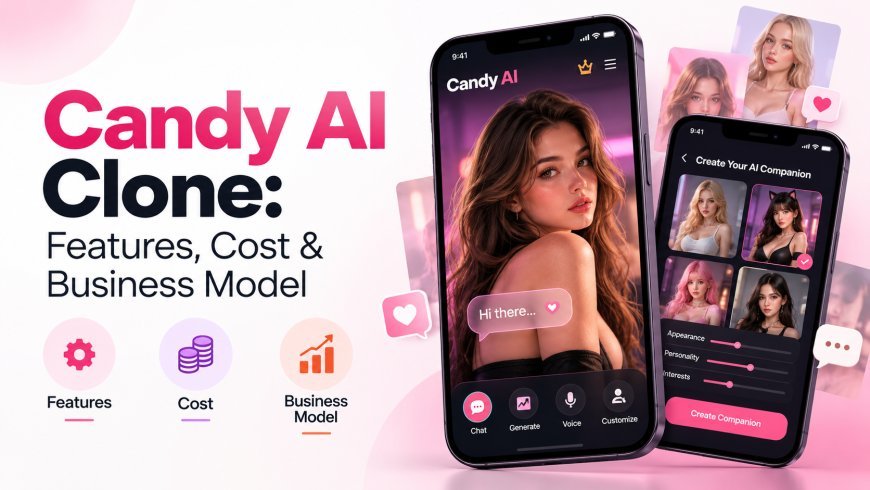
The growing interest in AI companion platforms has created new opportunities for entrepreneurs who want to build personalized chat applications. Users can interact with virtual characters, customize personalities, exchange messages, and explore AI-generated media through a single platform. For businesses, this creates an opportunity to develop a digital product with recurring revenue potential.
A Candy AI-style application combines conversational AI, character personalization, user accounts, and paid features. However, launching a successful platform requires more than a chatbot interface. Businesses must consider development costs, AI infrastructure, data privacy, content moderation, and a sustainable monetization strategy.
This guide explores the essential features, estimated development costs, and business models involved in launching an AI companion application.
What Is a Candy AI Clone?
A candy ai clone is an AI companion application inspired by the general functionality of platforms such as Candy AI. It allows businesses to create their own branded product where users can interact with virtual AI characters and receive personalized responses.
Depending on the project requirements, the application may include text-based conversations, character creation, AI-generated images, voice interactions, and premium subscription plans.
The objective is not to copy another company's proprietary software, branding, or content. Instead, entrepreneurs can develop an independent application with comparable functionality, a unique identity, and features designed for a specific audience.
For example, a startup might focus on fictional storytelling, anime-inspired characters, virtual friendship, or personalized entertainment. Choosing a specific audience can help the business develop a more recognizable product rather than competing solely on the number of available features.
Why Are Entrepreneurs Interested in AI Companion Apps?
AI companion platforms offer several opportunities for digital businesses.
Personalized user experiences: Users can select characters, define personality preferences, and participate in conversations that reflect their interests.
Recurring revenue opportunities: Subscription plans and premium credits can generate repeat purchases when customers find consistent value in the service.
Flexible product positioning: A business can focus on entertainment, fictional roleplay, creative storytelling, or adult-oriented experiences, subject to applicable laws and platform policies.
Expandable functionality: Additional features, such as voice messages, multilingual conversations, and AI-generated images, can be introduced as the product develops.
Nevertheless, demand alone does not guarantee profitability. AI processing expenses, customer acquisition, payment fees, and user retention all influence the long-term performance of the business.
Essential Features of a Candy AI Clone
The feature set should reflect the intended audience, available budget, and expected user experience. A startup can begin with a minimum viable product (MVP) and expand after evaluating customer feedback.
1. AI-Powered Chat
Conversational AI is the foundation of an AI companion application. Users should be able to exchange messages with virtual characters and receive contextually relevant responses.
The system can use an existing language model through an API rather than requiring the business to train a model from scratch. This approach can reduce initial development complexity.
Conversation quality depends on prompt design, response speed, context management, and the model selected for the application.
2. Character Creation and Customization
Users may want to select a character's name, appearance, personality, interests, communication style, and backstory.
A character customization module allows the platform to provide different experiences for different user preferences. Administrators should also be able to create, update, and manage character profiles without changing the application's underlying code.
3. Conversation Memory
A memory feature helps the AI retain relevant information from earlier conversations, subject to user permissions and privacy settings.
For instance, a character might remember a user's preferred fictional setting or previously discussed hobby. This can make future conversations feel more consistent.
Memory should be configurable. Users need clear options to review, delete, or disable stored information.
4. AI Image and Voice Generation
Media generation can make an AI companion platform more interactive. Depending on the business model, users may request character images, listen to generated voice messages, or access other creative content.
These features require additional integrations and operational resources. Image generation and voice processing can also increase the cost of serving each active user.
A practical launch strategy is to introduce one media feature first, measure its usage, and add more capabilities when the business can support the additional expense.
5. User Accounts and Personalization
Registration, secure login, profile settings, conversation history, and account management are important components of a commercial application.
Users should be able to manage their subscriptions, update preferences, and control their stored data. Secure authentication and appropriate access controls are essential for protecting accounts and conversations.
6. Subscription and Credit Management
A monetization module allows the business to offer free access alongside paid features.
For example, users might receive a limited number of free messages before upgrading to a subscription. Other features, such as image generation or voice interactions, could use a credit-based system.
Pricing should be transparent, with clear information about recurring charges, credit consumption, cancellation, and refunds.
7. Admin Dashboard and Analytics
An administration dashboard helps the business manage the platform without relying on developers for every routine task.
Useful functions include user management, character publishing, subscription administration, content moderation, support requests, revenue reporting, and usage analytics.
Analytics can also reveal which features users value most, helping the business prioritize future development.
8. Content Moderation and Privacy Controls
Safety measures should be included from the beginning rather than added after launch.
A responsible platform should implement appropriate age controls, prohibited-content filters, abuse reporting, secure data handling, and clear privacy policies. If the product includes adult-oriented functionality, additional legal, payment-provider, and content restrictions may apply.
The exact safeguards depend on the target market, applicable regulations, and the services integrated into the application.
How Much Does It Cost to Build an App Like Candy?
The cost to build app like candy depends on the development approach, number of features, AI model selection, integrations, and expected traffic.
A basic application with text chat has different requirements from a multimodal platform supporting image generation, voice interactions, persistent memory, and sophisticated administration tools.
The following figures are illustrative planning estimates in US dollars, not fixed vendor quotations.
| Development approach | Estimated cost | Typical scope |
|---|---|---|
| Basic MVP | $3,000–$8,000 | AI chat, login, basic character profiles |
| Mid-level platform | $8,000–$15,000 | Advanced chat, memory, subscriptions, selected media features |
| Advanced custom platform | $15,000–$25,000+ | Multiple AI integrations, voice, advanced personalization, scalable infrastructure |
Actual quotes can fall outside these ranges. Existing software, regional development rates, licensing, and custom requirements can significantly affect the budget.
Factors That Influence Development Cost
AI model integration: Using a third-party model can reduce the need for custom AI research, but API usage creates ongoing expenses. Self-hosted models require additional infrastructure and technical expertise.
Application design: A simple responsive web application generally requires less work than a highly customized interface with complex animations and multiple interaction modes.
Media generation: Image, voice, and video capabilities introduce additional integration, storage, moderation, and processing costs.
Backend infrastructure: User accounts, conversation storage, billing, analytics, and security all contribute to development effort.
Third-party integrations: Payment processing, analytics, authentication, and external AI services may involve implementation fees or recurring charges.
Testing and maintenance: Security testing, bug fixes, performance monitoring, and compatibility updates should be included in the project budget.
Development Cost Versus Operating Cost
One common budgeting mistake is to focus only on the initial development quotation.
An AI companion business also needs a recurring operating budget for model usage, hosting, storage, payment processing, customer support, moderation, and ongoing product improvements.
For example, an application with many daily conversations and frequent image generation may have substantially higher AI expenses than a text-focused MVP with a smaller user base.
Before launch, estimate the expected cost per active user and compare it with the revenue generated by subscriptions or paid credits. This calculation can help determine whether the proposed pricing model is financially sustainable.
Choosing Between Custom Development and a White-Label Solution
Businesses generally have two main options: develop an application from the ground up or customize an existing platform.
Custom Development
Custom development offers greater control over architecture, user experience, AI integrations, and future functionality. It may be suitable for businesses with specialized requirements or plans to build a differentiated technology product.
The trade-off is a larger initial investment, a longer development process, and responsibility for maintaining the complete system.
White-Label Development
A white label nsfw app is a customizable platform that a business can brand and operate under its own identity, where adult-oriented functionality is legally permitted.
Depending on the provider, a white-label solution may include AI chat, character management, payment integrations, subscription tools, and an administration dashboard. Some providers also offer image and voice generation.
This approach can help entrepreneurs reduce initial development work and concentrate on branding, audience research, marketing, and customer experience.
However, buyers should evaluate the software carefully. Confirm which features are included, whether the source code is available, who owns the customer data, what customization is possible, and whether the vendor supports the intended content category.
It is also important to review hosting arrangements, security responsibilities, payment-provider restrictions, and recurring licensing fees before signing an agreement.
Business Models for an AI Companion Platform
A sustainable business model should match the value users receive with the cost of providing the service.
1. Subscription Plans
Monthly or annual subscriptions provide access to premium characters, additional messages, enhanced memory, or other advanced functionality.
Subscriptions can produce more predictable revenue, although businesses must continue delivering value to retain customers.
2. Credit-Based Purchases
Users can purchase credits to unlock specific features, such as image generation, premium interactions, or additional usage.
This model provides flexibility, but the price of each interaction should account for the underlying AI processing cost.
3. Freemium Access
A freemium model offers basic functionality for free and reserves selected features for paying customers.
For example, users might access a limited number of messages before upgrading. The free experience should demonstrate the product's value without creating unsustainable operating expenses.
4. Premium Feature Bundles
Businesses can package advanced personalization, additional character options, or enhanced media features into premium plans.
Clear feature descriptions and transparent pricing help customers understand what they are purchasing.
5. Affiliate and Partnership Revenue
Where appropriate, businesses may earn revenue through relevant affiliate partnerships or commercial collaborations. These arrangements should be disclosed clearly and should not compromise user privacy.
How to Launch an AI Companion Business Successfully
Building the software is only one part of launching a competitive product. A practical approach involves several stages.
Step 1: Define the target audience. Decide whether the application will focus on virtual friendship, storytelling, character roleplay, or another specific use case.
Step 2: Validate demand. Research competing products, interview potential users, and test whether the proposed features solve a real problem or provide a compelling experience.
Step 3: Select the development approach. Compare custom development, licensed software, and white-label solutions against your budget, timeline, and ownership requirements.
Step 4: Build an MVP. Prioritize essential chat, character profiles, account management, privacy controls, and basic monetization before adding expensive features.
Step 5: Test the economics. Estimate model usage, hosting, payment fees, customer acquisition costs, and subscription revenue under different traffic scenarios.
Step 6: Launch and improve. Monitor retention, conversion rates, user feedback, and service costs. Use these findings to guide product updates rather than adding features without evidence of demand.
How CloneAppz Can Help With AI App Development
CloneAppz is a white-label and clone app development company that helps startups, agencies, and enterprises launch customizable mobile and web applications.
For entrepreneurs exploring an AI companion business, the appropriate development approach depends on the required functionality, target audience, budget, and technical ownership expectations.
Before selecting a development partner, discuss the proposed AI integrations, customization options, data security measures, monetization requirements, and ongoing maintenance arrangements.
Businesses considering a white-label platform should also confirm that the proposed functionality complies with applicable laws and the policies of their hosting, payment, and distribution providers.
Learn more about CloneAppz at https://cloneappz.com/ and discuss your project's requirements before deciding on a development model.
Frequently Asked Questions
1. What is a Candy AI clone?
It is an independently developed AI companion application inspired by the general functionality of Candy AI. It may include personalized characters, conversational AI, generated media, and premium access features without copying proprietary branding or code.
2. How much does it cost to build an app like Candy?
A basic MVP may cost approximately $5,000–$8,000, while a more advanced custom platform may cost $15,000–$25,000 or more. The final estimate depends on the feature set, AI integrations, design, and infrastructure.
3. How long does AI companion app development take?
A basic MVP may take several weeks to a few months. More complex applications can require several months or longer, depending on integrations, testing, and customization.
4. Is a white-label solution better than custom development?
A white-label solution may be suitable for businesses that prioritize faster deployment and lower initial development effort. Custom development offers more control but usually requires greater investment and ongoing technical resources.
5. How can an AI companion app generate revenue?
Common approaches include subscriptions, credit purchases, freemium upgrades, and premium feature bundles. The right combination depends on user demand, pricing, and the operating cost of AI services.
6. What features should an MVP include?
A practical MVP can start with AI chat, character profiles, secure registration, basic conversation history, subscription management, and essential moderation. More expensive features can be introduced after validating demand.
7. What should businesses consider before launching a white label NSFW app?
Businesses should evaluate applicable age restrictions, content policies, privacy requirements, payment-provider rules, moderation systems, and hosting limitations. Legal advice may be necessary for the markets in which the application will operate.
Final Thoughts
Launching an AI companion platform requires a clear product strategy, realistic financial planning, and a reliable technical foundation. Features such as conversational AI, character customization, memory, and premium access can create an engaging experience, but profitability depends on more than the feature list.
Before investing in a candy ai clone, compare development approaches, calculate the cost to build app like candy, and estimate recurring AI expenses. If faster deployment is a priority, a white label nsfw app may be worth evaluating alongside custom development.
The strongest approach is to start with a focused product, validate real user demand, and expand only when the business has evidence that additional features can improve retention and revenue.
What's Your Reaction?
 Like
0
 Dislike
0
 Love
0
 Funny
0
 Angry
0
 Sad
0
 Wow
0