

























How to Choose the Right Skin Stapler 35 Wide for Surgical Use
Learn how to choose a skin stapler 35 wide for veterinary surgical use, covering staple width, staple count, patient fit, handling, sterility and removal timing.

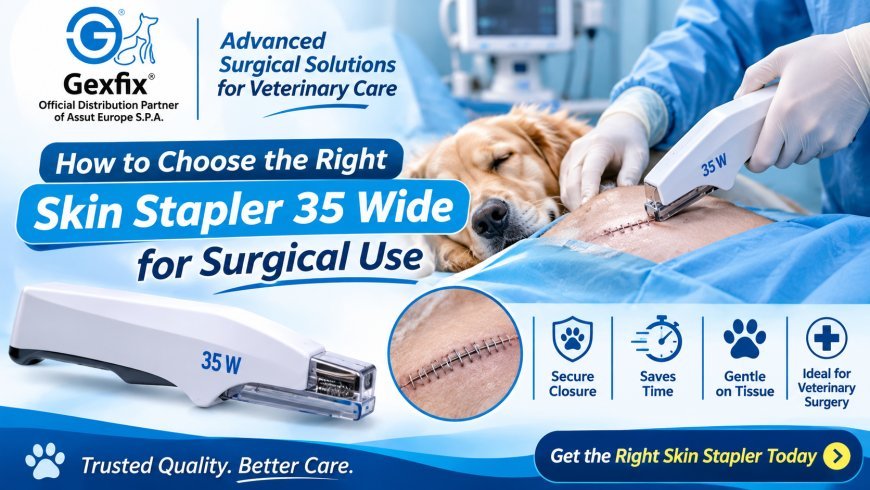
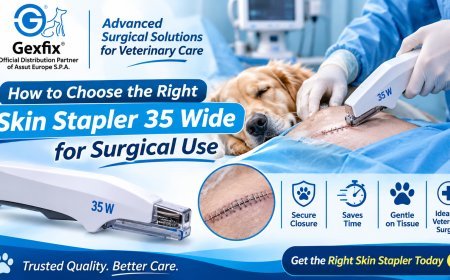
Skin closure is the last visible step of a surgical procedure, and the device used for it affects speed, consistency and how the incision looks as it heals. A skin stapler 35 wide is a disposable stapler loaded with thirty five staples of the wide size, and clinics often keep one on hand for longer skin incisions. The product name packs in several details that matter when deciding whether it fits a practice. Staple width, staple count, patient size and the way the stapler feels in the hand all play a part. This guide explains what each detail means and how to match a stapler to the procedures and patients a clinic sees most often.
What the Product Name Tells You
Product names for surgical staplers are short but informative. Reading them correctly prevents ordering mistakes.
The Number 35
The number refers to how many staples are loaded in the device. Thirty five staples is enough for a long incision or for several short ones if a surgeon is closing multiple small wounds on the same patient during one procedure. The count does not describe the length of the wound a device can close since that depends on how far apart the surgeon places each staple.
The Word Wide
Wide describes the staple itself. A wide staple spans more skin when it closes than a regular staple does. Wider staples tend to suit thicker skin and larger patients while narrower staples tend to suit thinner skin and smaller patients. The exact dimensions are given in the manufacturer's specifications and should be checked before ordering.
Box of 10 and Veterinary Use Only
A box of ten means ten separate devices. Each device is intended for one patient. The label veterinary use only indicates that the product is intended for animal patients and should not be used on people.
How a Disposable Stapler Closes the Skin
A disposable stapler is a handheld device preloaded with stainless steel staples. When the surgeon squeezes the handle, one staple is pushed through the skin on each side of the wound and bent into a rectangular shape. The staple holds the two edges together while the tissue underneath builds new strength. The surgeon repeats the motion along the length of the incision.
Staples close the skin layer only. They do not replace sutures in deeper layers such as muscle or subcutaneous tissue. Most surgeries close the deeper layers first with absorbable suture and then finish the skin with staples. Because staples are not absorbed, they are removed once the skin has healed enough to stay closed.
Staple Width and Skin Thickness
Choosing the right width is one of the most important decisions. A staple that fits the skin closes at the correct depth and holds the edges together without crushing them.
Why Width Matters
A staple that is too narrow for thick skin may not close properly. It can leave the edges loosely apposed or fail to hold under tension. A staple that is too wide for thin skin can leave slack so the edges are not held firmly. Either mistake can lead to gaps and delayed healing.
Skin Varies by Patient and Body Area
Skin thickness differs between breeds and between individual animals. It also varies across the body. The skin over the back and neck is usually thicker than the skin over the abdomen or the inner thigh. A clinic that treats both small and large patients may need more than one staple width on the shelf. A wide staple is generally a better fit for larger dogs and for thicker skin areas while thinner skinned patients may do better with a narrower staple.
Staple Count and Incision Length
A device loaded with thirty five staples is more than many common procedures need. A short incision may use only a handful of staples. This matters because a stapler is a single patient device. Once it has been used on one patient the remaining staples should not be saved for another patient. Unused staples are discarded with the device.
As a rough illustration the surgeon sets the spacing between staples according to skin tension. If staples are placed about half a centimeter to one centimeter apart a full device could cover an incision of roughly eighteen to thirty five centimeters. Clinics that perform long incisions regularly will use more of each device while clinics that mostly close short wounds may find a lower count wastes less. Reviewing the typical incision length across a month of cases gives a realistic picture.
Patient and Procedure Factors
The right stapler also depends on what the clinic does day to day.
Procedures
Staples are commonly used for skin closure after abdominal surgery and orthopedic procedures. They are also used after removal of skin masses and to repair straight lacerations. Short curved or irregular wounds are harder to staple evenly and often suit sutures or another method.
Patient Size
Larger patients generally have thicker skin and longer incisions so a wide staple with a high staple count may suit them well. Small patients have thinner skin and shorter incisions so a narrower staple and a lower count may be a better match.
Wound Characteristics
Staples work best on straight or gently curved skin incisions under moderate tension. They are less suitable for very thin or fragile skin that can tear. Areas that bend constantly such as skin over a joint can loosen staples with each movement. Heavily contaminated wounds usually need cleaning and sometimes staged closure before skin closure is attempted.
Handling and Mechanism Checks
A device should be easy to use and consistent. These points can be evaluated before ordering in volume.
-
The handle should feel comfortable and allow smooth squeezing without excess force
-
Each staple should form cleanly and in the same way every time
-
The placement area should be visible so the device can be centered over the wound line
-
The device should feel balanced so it does not tire the hand during a long closure
-
The trigger should return smoothly so the next staple is ready without fumbling
Trying a sample on a practice surface lets the surgical team judge these points. A device that feels awkward is likely to be used less accurately.
Sterility, Labeling and Storage
Disposable devices are generally supplied sterile and ready to use. Confirm this on the label and keep the packaging sealed until the moment the device is needed. A damaged package means the device should not be used on a patient. Check the expiration date and the lot number on arrival. Store devices in a clean dry place away from heat and moisture and use older stock first.
Single use design removes the need for cleaning between patients and helps keep the mechanism consistent from one case to the next. Attempting to reprocess a disposable stapler can damage the mechanism and compromise its function.
How It Compares With Other Closure Options
No single closure method suits every wound. Understanding the alternatives explains where a stapler fits.
A skin stapler closes long straight skin incisions quickly and spaces the closure evenly. Sutures offer more control and work in any tissue layer. They can be adjusted for tension and used on curved or irregular wounds but they take longer to place.
Tissue adhesive sets within seconds and forms a flexible seal on short shallow wounds with little tension. It avoids a removal visit since it wears away as the skin heals. It lacks the strength to hold a long incision or a wound that moves with the body. Some teams apply a thin layer of surgical glue over a closed incision as a surface barrier in patients likely to lick the area. This layer supports a properly closed wound and does not replace structural closure.
The decision usually comes down to incision length and tension and the behavior of the patient. A short low tension wound on a calm patient may do well with adhesive. A long incision on an active patient often suits staples or sutures.
Instrument Readiness
A stapler is only one part of the closure. Clean tissue and accurate edge placement help every method succeed. Well maintained veterinary surgical instruments let the surgeon trim damaged tissue and evert the skin edges before any staple is placed. Forceps with matching tips hold the skin without slipping. Sterile equipment lowers the risk of infection.
Do not forget removal. A staple remover designed for the job should be ready in the clinic. Removal with improvised tools can pull on the skin and cause discomfort or injury.
Technique Overview
Good technique matters as much as the device. The steps below give a general overview rather than a replacement for training.
Prepare the Wound
The skin should be clean and the wound edges free of debris. Moisture and blood at the edge make it harder to line up the skin accurately. Deeper layers are closed first when needed.
Evert the Edges
The surgeon lifts both edges gently with forceps so they turn slightly outward. This brings the deeper skin layers into contact and supports a clean narrow scar. Edges that roll inward tend to heal poorly.
Position and Place
The center of the stapler head is placed over the wound line. A staple placed off center can pull one edge more than the other. The head rests lightly on the skin without pressing down hard so the staple has room to close at the right depth.
Space and Check
Staples are placed at regular intervals. Spacing depends on skin tension and patient size. After the last staple is placed the surgeon inspects the line. A staple pressed too deep can cut into the skin and one left too high may not hold the edges together. Correcting one staple at this stage is far easier than dealing with a problem later.
Aftercare and Removal Timing
Aftercare protects the closure during healing. Owners should keep the incision clean and dry unless told otherwise and limit running and jumping. An Elizabethan collar helps prevent licking and chewing which can open the wound or trap bacteria against the skin. Daily checks help owners notice changes early.
Staples are usually removed about ten to fourteen days after surgery. The timing depends on the incision location and how quickly the patient heals. The veterinarian checks the skin first. If one section has healed more slowly the staples there may stay a little longer. Removal is quick and most patients tolerate it well.
Signs That Need a Call
Contact the clinic if any of these appear:
-
Redness that spreads or skin that feels hot
-
Swelling that grows
-
Discharge or a bad smell
-
A wound that opens at the edges
-
Staples that loosen or fall out
-
Loss of appetite or unusual tiredness
Possible Complications
Complications are not common but staff and owners should know what to look for. Skin irritation around the staples can occur and is often mild. Infection can develop if bacteria enter along the staple line and usually shows as spreading redness or discharge. Wound edges can separate if the patient is too active or if the incision was under too much tension. Fluid pockets called seromas can form under the skin and appear as soft swelling. If the skin swells around a staple the staple can sink into the tissue and may need earlier removal. Prompt attention keeps most problems minor.
Inventory and Cost Planning
A box of ten devices needs to be planned like any other surgical stock. Consider how many procedures a month use a stapler and how many staples each procedure really needs. If most incisions are short a lower staple count may reduce waste. If incisions are often long a higher count avoids the need for a second device in the middle of a case.
Cost per procedure gives a clearer picture than price per box. Include the time saved during closure and the cost of any waste. Track expiration dates and rotate stock so older devices are used first. Keeping a standard set of trusted products usually works better than stocking many different brands of the same item. This applies to veterinary surgical instruments in general since a smaller consistent set is easier to train staff on and easier to restock.
Evaluation Checklist
A short checklist helps compare staplers on equal terms.
-
Does the staple width suit the skin thickness of the patients treated most often?
-
Does the staple count suit the typical incision length?
-
Does the handle feel comfortable and reliable to the surgical team?
-
Do the staples form cleanly and consistently?
-
Is the device labeled for veterinary use and supplied sterile?
-
Is the supplier able to deliver consistently and answer questions?
-
Does the cost per procedure make sense over time?
Requesting a sample or arranging a trial lets staff handle the device before ordering in volume.
Common Mistakes to Avoid
Several mistakes appear repeatedly with stapled closures. Placing staples on edges that are not everted leaves the deeper skin layers misaligned. Placing staples too tightly can restrict blood supply and cause the skin edge to die back. Using staples on a wound under heavy tension is another problem since a staple line cannot hold a gap that wants to pull apart.
Choosing a width that does not match the skin is also frequent. Leaving staples in too long can leave marks where the legs entered the skin and makes removal less comfortable. Saving a partly used device for another patient is unsafe and should be avoided. Finally some clinics order a large quantity of an untested product so problems only appear once the stock is committed.
Summary
Choosing a skin stapler 35 wide starts with understanding what the name means. Thirty five describes the number of staples and wide describes the staple width. The best fit depends on the skin thickness of the patients and the length of the incisions a clinic closes. Handling and consistent staple formation matter as much as the specifications. Sterile single patient packaging and good supplier support complete the picture. Staples work best on straight skin incisions while other methods such as sutures and adhesive remain important for different wounds. Careful technique and aftercare help the closure heal cleanly.
Gexfix International Corp. supplies disposable staplers, skin adhesive and absorbable and non absorbable veterinary sutures in partnership with Assut Europe S.P.A.
FAQs
Q: What does 35 wide mean on a surgical stapler?
A: The number 35 refers to the staples loaded in the device and wide refers to the staple width. A wide staple spans more skin and generally suits thicker skin and larger patients. Check the manufacturer's specifications for exact dimensions.
Q: Can leftover staples be used on another patient?
A: No. A disposable stapler is intended for one patient. Unused staples should be discarded with the device. Reusing a partly used device risks contamination and can affect how the mechanism works.
Q: When are staples removed after surgery?
A: Staples are usually removed ten to fourteen days after surgery. The timing depends on the incision location and healing speed. The veterinarian checks the skin first and may leave some staples longer if one section heals more slowly.
Q: Can staples replace sutures in deeper layers?
A: No. Staples close the skin layer only. Deeper layers such as muscle and subcutaneous tissue still need suture. A typical closure uses absorbable suture beneath and staples on the skin above.
Q: Are staples suitable for every wound?
A: No. Staples suit straight or gently curved skin incisions under moderate tension. Very thin skin, areas that flex constantly, deep wounds and contaminated wounds usually need sutures or another method for a secure closure.
Notes for the client review: the primary keyword links to their Disposable Skin Stapler Wide, 35 Staples product page. The other links go to the skin stapler collection, the skin glue collection and the instrument sterilization post. I only used details from the product name (35 staples, wide, box of 10, veterinary use only), so if the product page lists staple dimensions or confirms sterile packaging, adding those would make the post more specific. The staple spacing and coverage figures are an illustration, not a product claim.
What's Your Reaction?
 Like
0
 Dislike
0
 Love
0
 Funny
0
 Angry
0
 Sad
0
 Wow
0