





















On-Page SEO in 2027:- Beyond Keywords; How to Optimize for Context and Intent
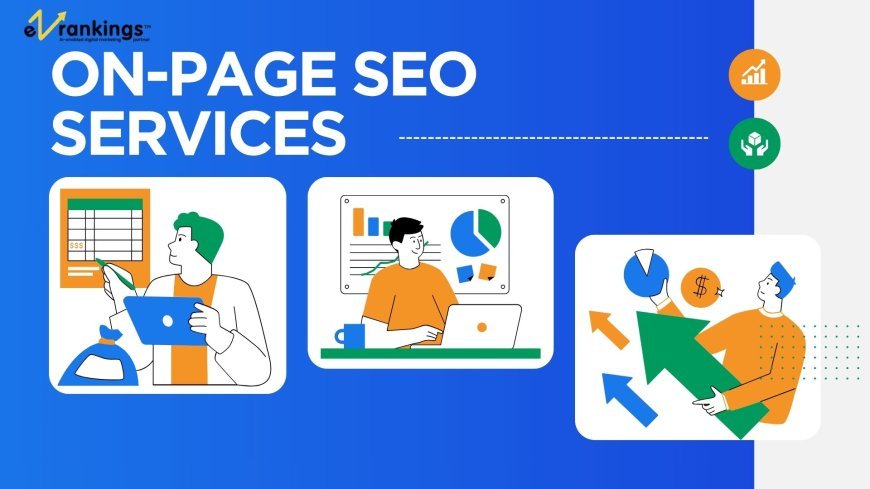
Keyword density stopped mattering years ago. Yet plenty of teams still audit pages by counting exact-match phrases and calling it a day. That approach leaves ranking potential on the table. Google now reads pages the way a well-briefed editor would, weighing entities, relationships, and whether you actually answered the question behind the query. This is where modern on-page SEO services help, and where the old checklists fall apart.
Semantic SEO Is the New Baseline
Search engines map meaning, not strings. When someone types "best running shoes for flat feet," the algorithm isn't hunting for that phrase repeated eight times. It's checking whether your page understands pronation, arch support, and the brands people trust.
Semantic optimization means covering a topic completely enough that the model recognizes you as a credible source on it. Build topical depth around a subject, not a single term. Cover the subtopics a real expert would raise unprompted. That completeness is what most SEO services underinvest in.
Entity Optimization:-Speak Google's Language
Entities are the nouns Google keeps in its Knowledge Graph. People, places, concepts, products. The more clearly you connect your content to recognized entities, the better the machine understands your relevance.
How to strengthen entities on a page
● Use concrete terms to refer to entities rather than generic terms (e.g. Ahrefs or Screaming Frog, not popular SEO tools).
● Use structured data (schema markup) to help machines understand your entities without having to guess.
● Use descriptive anchors for internal linking, reinforce topic clusters.
● Use authoritative sources to establish co-occurrence with trusted sources.
Why this beats keyword stuffing
For example, there are 15 repetitions of the word "keto diet” in a page and that’s a clear warning to the crawlers. On the other hand, a page about macronutrient ratios, ketosis, insulin response and specific foods is a clear sign of true expertise. Google will give props to the latter, even if the phrase in question doesn't occur as much.
Matching Intent, Not Just Queries
Intent is the reason behind the search. Get it wrong and even a technically flawless page underperforms. Someone searching "email marketing" during research wants a guide. Someone searching "email marketing software pricing" is close to buying. Same topic. Different jobs.
Here's a practical way to align a page with intent:
- Pull the top 10 results for your target query and note the dominant format (listicle, tutorial, comparison, product page).
- Identify whether the SERP leans informational, commercial, or transactional.
- Match that format before you write a word. Don't publish a 4,000-word essay where Google clearly wants a comparison table.
- Answer the primary question in the first 100 words, then expand.
Structuring Content for AI and Featured Snippets
AI Overviews and answer engines pull from clean, well-organized pages. Messy formatting gets skipped. Clear structure gets cited. Write in a way machines can lift. Use question-based H2s that mirror how people actually ask things. Keep paragraphs tight, usually two to three sentences. Put the direct answer right under the heading, then add nuance below it.
A few structural moves that consistently help:
● Front-load answers so extraction tools grab the right sentence.
● Use tables for anything comparative. AI systems love parsing them.
● Add a short FAQ block targeting long-tail variations of your main query.
● Keep sentence structure varied so the writing stays readable for humans too.
And don't over-optimize. Pages built purely for machines read like machines wrote them, and that bounces users fast.
Conclusion
Start with your highest-traffic pages that rank on page two. Rework them for intent and entity coverage before touching anything else. You'll usually see movement within a few weeks, faster than net-new content takes to index and mature. The teams winning in 2026 treat context as the primary signal. Reliable on-page SEO services do the same. If your process still revolves around keyword counts, that's the first thing to fix.
What's Your Reaction?
 Like
0
Like
0
 Dislike
0
Dislike
0
 Love
0
Love
0
 Funny
0
Funny
0
 Angry
0
Angry
0
 Sad
0
Sad
0
 Wow
0
Wow
0