

























Toyota C-HR from Japan: What Cyprus Buyers Should Know Before Importing
Learn how to import a Toyota C-HR from Japan to Cyprus, including hybrid options, import costs, customs, registration, and vehicle checks.

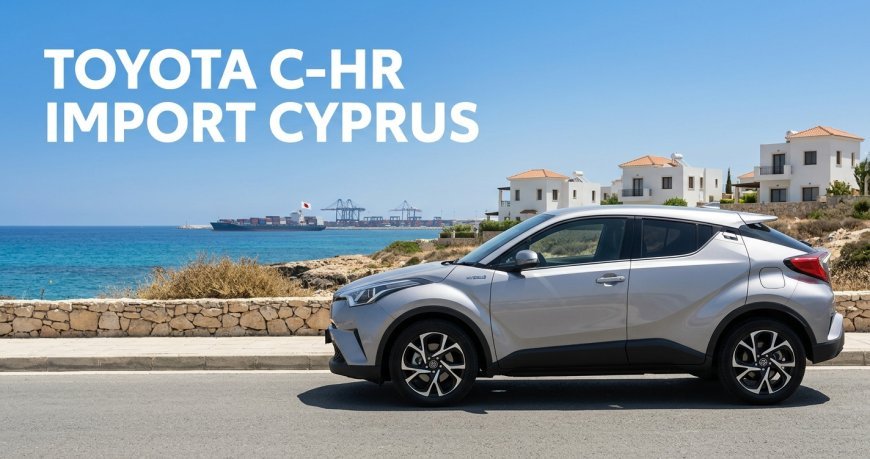
The Toyota C-HR has become an appealing option for drivers who want the practicality of a compact SUV without the bulk of a larger family vehicle. Its distinctive styling, efficient hybrid powertrain options, and comfortable urban driving characteristics make it worth considering for Cyprus motorists. However, purchasing a vehicle from Japan involves more than choosing a model and arranging shipping. Buyers must also understand import eligibility, customs procedures, registration requirements, and the overall cost of bringing the vehicle onto Cypriot roads.
For anyone considering a Toyota C-HR import Cyprus, careful research can help avoid unexpected expenses and make the buying process more straightforward. From selecting the right model year to checking auction records and calculating landed costs, several factors deserve attention before committing to a purchase.
Why Consider a Toyota C-HR from Japan?
The Toyota C-HR combines the elevated seating position of a crossover with a relatively compact footprint. This makes it suitable for navigating town centres, parking in tighter spaces, and travelling on Cyprus's coastal and intercity roads.
Japanese-market vehicles can also offer attractive equipment levels, well-maintained interiors, and a range of petrol and hybrid configurations, depending on the model year and trim. However, specifications vary, so buyers should compare individual vehicles rather than assume that every Japanese version matches its European counterpart.
A used Toyota C-HR may appeal to buyers seeking a balance between fuel economy, everyday comfort, and contemporary styling. Hybrid variants are particularly worth investigating for drivers who regularly encounter traffic around Nicosia, Limassol, Larnaca, and other busy urban areas.
Nevertheless, a vehicle's country of origin does not automatically guarantee superior condition or better value. Its maintenance history, mileage, accident record, and import eligibility remain essential considerations.
Choosing the Right Toyota C-HR Model
Before beginning the import process, buyers should identify the model year, powertrain, and specification that best match their requirements.
Hybrid or Petrol?
The Toyota C-HR has been offered with different petrol and hybrid powertrains across generations and markets. Earlier Japanese-market examples may have different specifications from newer models, so the exact engine and transmission should be verified against the vehicle's documentation.
A hybrid SUV can be particularly attractive for predominantly urban driving because its petrol engine and electric motor work together to improve efficiency under suitable driving conditions. Hybrid systems can also reduce fuel consumption in stop-start traffic compared with some conventional petrol alternatives.
However, fuel economy depends on driving style, road conditions, vehicle condition, and the specific powertrain. Buyers should check the hybrid battery's condition, warning lights, diagnostic results, and service records before purchasing.
Model Year and Equipment
Newer models may offer updated safety technology, infotainment features, and revised powertrains. Older examples may have a lower purchase price, but age-related maintenance and differences in equipment can affect their overall value.
It is also important to confirm whether the vehicle has the safety and technical features required for registration in Cyprus. Japanese domestic-market specifications should not be assumed to meet every European regulatory requirement automatically.
Understanding Crossover Import Costs in Cyprus
The purchase price is only one component of the final expense. Buyers should calculate the complete landed cost before bidding or placing an order.
For a vehicle shipped from Japan, the budget may need to cover:
-
Vehicle purchase price or auction bid.
-
Auction fees and exporter charges.
-
Inland transport in Japan, shipping, and marine insurance.
-
Applicable import duty and Cyprus VAT.
-
Port handling and customs-clearance charges.
-
Inspection, registration, documentation, and any required modifications.
Cyprus Customs states that vehicles imported from outside the European Union are generally subject to import duty and VAT. The standard VAT rate is 19%, while the applicable customs duty depends on the vehicle's classification and eligibility for preferential treatment. The customs authority should confirm the rate for the specific vehicle before purchase.
How to Estimate the Total Cost
Consider a hypothetical vehicle with a purchase price of €10,000, shipping and insurance of €1,500, and an assumed import duty of 10%.
|
Cost component |
Illustrative amount |
|---|---|
|
Vehicle purchase |
€10,000 |
|
Shipping and insurance |
€1,500 |
|
Customs value (CIF) |
€11,500 |
|
Assumed 10% import duty |
€1,150 |
|
VAT at 19% on €12,650 |
€2,403 |
|
Total before other charges |
€15,053 |
This is an illustrative calculation, not a quotation or confirmation of the duty rate. Preferential customs treatment may be available when the vehicle meets the applicable origin rules and the required evidence is accepted. Confirm the current tariff, VAT treatment, and registration costs with Cyprus Customs before committing to a purchase.
The example demonstrates why comparing vehicles solely by auction price can be misleading. A seemingly inexpensive vehicle may become less competitive once transport, taxes, and registration-related expenses are included.
Check Import Eligibility Before Buying
One of the most important steps is confirming that the exact Toyota C-HR can be imported and registered in Cyprus. Customs clearance does not automatically mean a vehicle is eligible for road registration.
Cyprus's Road Transport Department provides guidance on registration procedures, including requirements for vehicles imported from outside the EU. Some used passenger cars from third countries must be registered through an authorised importer, and approval requirements depend on the vehicle and its documentation.
Before paying a deposit, buyers should confirm:
-
Whether the vehicle's age and specification meet the applicable import rules.
-
Whether its Japanese-market configuration can satisfy Cyprus approval requirements.
-
Which registration documents and technical inspections will be necessary.
-
Whether modifications or additional certification may be required.
-
Whether the importer handling the transaction is authorised to complete the registration process.
These checks are particularly important for vehicles built for the Japanese domestic market, because their specifications and approval documentation may differ from those of European-market models.
Inspect the Auction Sheet and Vehicle History
Japanese vehicle auctions provide a useful starting point for assessing a car, but the auction grade should never be treated as a complete guarantee of condition.
An auction sheet may contain information about the vehicle's overall condition, interior quality, mileage, previous damage, and visible defects. Buyers should ensure that the sheet belongs to the exact chassis number being considered and that any abbreviations or inspection markings are properly interpreted.
For a used Toyota C-HR, particular attention should be paid to:
-
Accident and repair history: Look for recorded structural damage, repainting, or repairs that may affect safety and resale value.
-
Mileage consistency: Compare the recorded mileage with available service documentation and inspection records.
-
Hybrid system condition: Request relevant diagnostic checks and available battery-health information for hybrid variants.
-
Mechanical condition: Check the engine, transmission, suspension, brakes, tyres, and any dashboard warning lights.
-
Interior and exterior wear: Assess whether the vehicle's condition matches its age, mileage, and advertised grade.
An independent inspection can help identify problems that photographs or an auction grade may not fully reveal. Buyers should also remember that a hybrid battery's remaining lifespan cannot reliably be determined from mileage alone.
Shipping, Documentation, and Delivery
Once a suitable vehicle has been selected, the next stage involves arranging export from Japan and shipping to Cyprus. Buyers should establish which services are included in the exporter's quotation and which charges remain payable separately.
The documentation may include the purchase invoice, original Japanese registration or export certificate, bill of lading, shipping and insurance records, and customs declarations. The precise requirements should be confirmed with the exporter, customs agent, and relevant Cyprus authorities before shipment.
A clear written quotation should specify:
-
The vehicle price and all auction-related fees.
-
The shipping method and estimated delivery arrangements.
-
Insurance coverage during transit.
-
Expected customs and port charges.
-
Customs-clearance assistance and registration support.
-
Any exclusions, additional service fees, or possible storage charges.
Buyers should also ask what happens if the vehicle arrives with damage or if a documentation issue delays clearance. Written terms make it easier to understand responsibilities and avoid disagreements later.
Is a Toyota C-HR a Good Choice for Cyprus?
For many drivers, the Toyota C-HR offers a compelling combination of compact dimensions, distinctive design, and potentially economical hybrid performance. It can suit daily commuting, shopping trips, and longer journeys between Cyprus's main towns.
However, its suitability depends on individual needs. Families should check rear-seat access, passenger space, and boot capacity, while frequent motorway drivers should consider comfort, road noise, and real-world fuel consumption. Buyers who regularly travel on rural roads should also assess ground clearance, tyre condition, and suspension performance.
Resale value deserves attention as well. A well-documented vehicle with a verifiable service history and appropriate registration paperwork may be easier to sell than an otherwise similar car with incomplete records. The popularity of the Toyota name alone does not guarantee a particular resale price.
Comparing a Japanese import with an equivalent vehicle already available in Cyprus is therefore worthwhile. The local option may cost more initially but offer simpler paperwork, an established registration history, and a more straightforward purchasing process.
Finding the Right Japanese Import
Choosing the right vehicle requires a balance between purchase price, condition, specification, and total ownership costs. Buyers should compare several examples rather than rushing to secure the first attractive auction listing.
Exploring Toyota C-HR and other Japanese imports can help Cyprus buyers investigate available options and understand the process of sourcing vehicles from Japan. Before proceeding, they should request a vehicle-specific quotation, confirm import eligibility, and ensure that the expected total cost includes all major charges.
Final Thoughts
Importing a Toyota C-HR from Japan can be a practical route to finding a compact crossover with attractive styling and, where applicable, hybrid efficiency. The key is to evaluate the complete transaction rather than focusing exclusively on the auction price.
For anyone researching Toyota C-HR import Cyprus options, three priorities should guide the decision: verify the vehicle's condition, confirm that it can be registered, and calculate all crossover import costs before committing to a purchase. With those checks completed, buyers can make a more informed comparison between Japanese imports and locally available vehicles, reducing the risk of unexpe
What's Your Reaction?
 Like
0
 Dislike
0
 Love
0
 Funny
0
 Angry
0
 Sad
0
 Wow
0