




















Why Instrument Jaw Alignment Matters in Surgical Procedures
Learn why jaw alignment decides how surgical instruments perform and how to test it. ISO-certified Jalandhar manufacturer since 1967. Request a quote today.

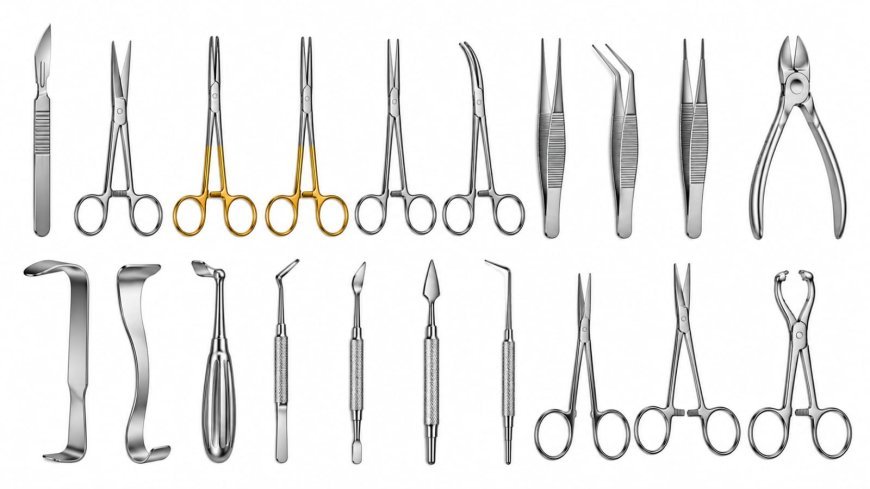
Close a needle holder on a curved needle. If one jaw sits a hair off the other, the needle rotates, the surgeon corrects, and nobody records the lost seconds. That is how misaligned surgical instruments hide inside a normal working day.
The defect is tiny, but the consequences travel far.
Surgeons blame technique first and the tool last, so a complaint can arrive weeks after the real problem began. Wholesalers and brand owners absorb that delay as returns, credit notes and lost reorders. Think of jaws as two hands clasping: if one finger sits proud, the grip changes everywhere. Here's where alignment goes wrong and how to test for it.
Anatomy of a Jaw, and Where It Goes Out of True
Alignment matters in clamps, forceps, needle holders and scissors. This section stays with hand instruments and leaves powered surgical instruments, such as diathermy units, aside.
Tip Contact and Tooth Mesh
Closed jaws should meet tip to tip, with serrations interlocking cleanly. A gap lets tissue slip or a needle pivot. Teeth that ride on top of each other mark the grip surface and wear it faster.
The Box-Lock Is Usually the Root Cause
Sideways play in the joint lets one jaw drift as the surgeon squeezes. Makers fit that joint to tight tolerances, and holding that fit across a whole lot is harder than buyers expect.
The Overlooked Detail: Alignment After Sterilisation
An instrument can pass inspection on the bench and drift after repeated steam cycles at 134°C, especially where hardening was uneven. Martensitic steel such as AISI 420 (12–14% chromium) relies on heat treatment to hold its shape. Nobody tells you to retest alignment after cycling, so ask whether your supplier does.
Before You Approve a Supplier, Run Five Jaw Checks
When you screen surgical instruments manufacturers, put a closed sample through these tests and watch for the red flags.
-
Light test. Hold the closed instrument toward a lamp. Light between the jaws means a gap.
-
Tooth mesh. Look at the serrations with the jaws closed. They should interlock. Red flag: teeth that sit on top of each other.
-
Ratchet hold. Close to the first ratchet position and tap the handles. Red flag: slipping under light load.
-
Retest post cycling. Ask for alignment report following sterilisation by steam. Red flag – a supplier who has no record of retesting.
-
Records. Ask for the ISO 13485:2016 certificate number and the inspection records. Red flag: "within tolerance" with no tolerance stated.
Buyers who inspect only the finish are buying looks, not function. And a supplier who says "within tolerance" without naming the tolerance is quoting a slogan.
After the Check: What Aligned Jaws Do for Your Books
-
Fewer returns: aligned jaws cut "doesn't grip" complaints, so fewer pieces travel back.
-
Steadier reorders: surgeons who never notice the jaws never switch brands.
-
Stronger audit trail: inspection records tie each lot to its test results.
-
Brand reputation: your label stays off a batch with drifting jaws.
If You Source From Jalandhar, Here's What Moves Quickly
Find us at 1382/1046, Raja Garden, Basti Danishmandan, near Vishal Tools, Jalandhar – 144002, Punjab. The city's surgical and hand-tool trade keeps forging, heat-treatment and polishing shops within reach of each other, so a joint refit doesn't wait on parts shipped across states. Delhi's air cargo terminals lie about 360 km away by road.
Shortlisting surgical instruments manufacturers in India, surgical instruments suppliers in India or surgical instruments exporters in India? Ask where joint fitting happens and who checks it.
Our Stance on Jaw Alignment, Since 1967
Surgifact is ISO-certified, and surgical instruments have been our trade since 1967. Our stance is simple: jaw alignment is a specification, not a finishing touch. We'd rather discuss it before an order than after a complaint.
Before You Order, Send Us These Four Things
-
The item list with pattern or code numbers
-
The jaw type for each item: needle holder, forceps, clamp or scissors
-
Your quantities
-
Your destination country
We'll reply with a quote and tell you which items we can match.
When the Jaws Close Right, Everything Downstream Gets Easier
Alignment is a small spec with a long reach. Choose surgical instruments manufacturers who test it, record it and retest it after sterilisation, and your returns shrink. Next year's surgeons will judge your brand by how a clamp feels in the first minute.
While You Decide: Questions We Hear
How much gap is acceptable between jaws on surgical instruments?
Closed jaws should show no visible light in a bench test. Tolerances differ by instrument type, so ask each supplier for theirs in writing.
Can surgical instruments suppliers in India share alignment test records?
Share your planned order, and we'll list the records available for those items.
What should I send surgical instruments exporters in India for a quote?
As surgical instruments exporters, we need the item list with pattern numbers, quantities and destination. Import rules at your end stay with you.
Do you also make surgical equipments like diathermy units?
No. We make hand instruments. For surgical equipments that run on power, use a supplier certified for those devices.
Can I fix a misaligned jaw myself?
Return it with photos instead, because adjusting a joint without proper tooling usually worsens the fit.
Does repeated sterilisation change alignment?
It can, especially in poorly hardened steel. Ask for a retest after cycling, but remember that heavy clinical use also changes things, so no supplier can promise zero drift.
What happens if a batch arrives with misaligned jaws?
Report it inside your contract's claim period with photos, lot numbers and, ideally, a short video of the light test. We'll examine the pieces and offer a replacement or credit. Drops and misuse fall outside that.
What's Your Reaction?
 Like
0
Like
0
 Dislike
0
Dislike
0
 Love
0
Love
0
 Funny
0
Funny
0
 Angry
0
Angry
0
 Sad
0
Sad
0
 Wow
0
Wow
0