























8 Common PPC Advertising Mistakes Businesses Should Avoid
PPC advertising can be a valuable growth channel for businesses in Dubai, but success requires more than launching advertisements and waiting for clicks. Incorrect keywords, weak ad copy, unsuitable landing pages, poor budget management, and unreliable tracking can all undermine campaign performance.

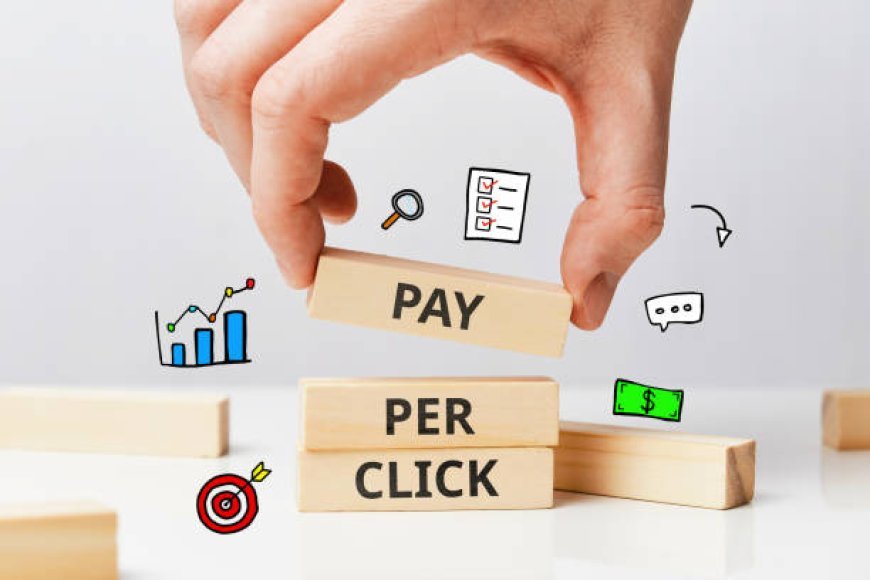
Pay-per-click (PPC) advertising can help businesses attract qualified leads, increase website traffic, and generate sales, but only when campaigns are planned and managed effectively. Many companies invest in paid search without a clear strategy, accurate conversion tracking, or a proper understanding of their target audience. As a result, they may spend their marketing budgets on irrelevant clicks without achieving meaningful business outcomes. Working with a knowledgeable ppc agency dubai can help businesses identify these issues, improve campaign structure, and develop advertising strategies that support their growth objectives.
For businesses operating in Dubai, PPC advertising offers opportunities to reach customers across a wide range of industries, from real estate and hospitality to retail, healthcare, and professional services. However, competition for valuable search terms can be significant, making efficient budget management and continuous optimization essential.
Understanding common PPC mistakes is the first step toward improving campaign performance. Here are eight problems businesses should avoid when running paid advertising campaigns.
1. Targeting the Wrong Keywords
Keyword selection plays a central role in determining who sees your advertisements. Even a well-written ad can produce disappointing results if it appears for searches that have little connection to the products or services you provide.
Businesses sometimes select keywords based entirely on search volume, assuming that more searches automatically mean more customers. In reality, a high-volume keyword may attract people who are researching general information rather than looking to make a purchase.
Focus on search intent
Before selecting a keyword, consider what the user is trying to accomplish. Someone searching for a specific service provider may have stronger commercial intent than someone looking for a general definition or tutorial.
For example, a business offering professional accounting services in Dubai should prioritize search terms that reflect a genuine need for accounting support rather than targeting every keyword associated with finance.
Organizing keywords according to search intent also makes it easier to create relevant advertisements and landing pages.
Use negative keywords strategically
Negative keywords help prevent advertisements from appearing for irrelevant searches. Depending on the business, exclusions might include terms associated with free resources, employment opportunities, unrelated products, or do-it-yourself instructions.
Review search-term reports regularly to identify queries that consume budget without generating valuable traffic.
Refine your keyword list over time
Keyword research should not end when a campaign launches. Search behavior changes, and real campaign data may reveal new opportunities or irrelevant queries that were not obvious during planning.
Businesses comparing a ppc agency in dubai should ask how the provider conducts keyword research, monitors search terms, and uses negative keywords to improve campaign relevance.
A carefully researched keyword strategy helps attract visitors who are more likely to become customers.
2. Ignoring the Quality of Ad Copy
Your advertisement is often the first interaction a potential customer has with your business. If the message is vague, misleading, or unrelated to the search, users may ignore it or click without understanding what you offer.
Poor ad copy can also create a disconnect between the customer's expectations and the experience they receive after visiting your website.
Communicate a clear value proposition
An effective advertisement should explain what you provide and why it may be useful. Depending on your business, relevant benefits might include specialist expertise, convenient booking, a clear service offering, or responsive customer support.
Avoid generic statements that could describe almost any competitor. Instead, highlight genuine features that distinguish your business.
Match the advertisement to the search
Someone searching for a particular service should see an advertisement that addresses that service directly. A generic message covering multiple unrelated offerings may be less persuasive.
Create focused ad groups and write advertisements that reflect the keywords and intent associated with each group.
Test different messages
Experiment with headlines, descriptions, and calls to action. Compare the results using meaningful performance measures, including qualified leads and conversions.
A high click-through rate may indicate that an advertisement attracts attention, but it does not necessarily mean that the campaign generates profitable business.
Businesses that invest in a ppc creative agency dubai approach should prioritize clear messaging, relevant creative testing, and accurate claims rather than relying on attention-grabbing language alone.
3. Sending Visitors to the Wrong Landing Page
Getting a user to click an advertisement is only part of the process. The destination page must help that visitor find relevant information and complete the next step.
One common mistake is sending all paid traffic to the homepage, regardless of the search query or advertisement. This forces users to search for the information they expected to find immediately.
Create relevant landing pages
If an advertisement promotes a specific service, direct users to a page dedicated to that service. The page should explain the offering, highlight relevant benefits, and provide a clear route to enquire or purchase.
For example, a business advertising a particular consulting service should send visitors to a page describing that service rather than a general page listing every service it provides.
Improve mobile usability
Many customers research businesses on smartphones. A landing page that loads slowly, displays poorly, or contains difficult-to-use forms can discourage visitors from taking action.
Test your pages on different devices and check that buttons, forms, contact details, and navigation work correctly.
Reduce unnecessary friction
Keep the page focused on the advertised offer. Remove unnecessary distractions, make important information easy to find, and ask visitors for only the details needed at that stage.
Clear pricing information, accurate service descriptions, and accessible contact options can also help establish trust.
A relevant, user-friendly landing page supports the entire advertising process by turning clicks into meaningful opportunities.
4. Failing to Set a Realistic Budget
PPC advertising provides flexibility in spending, but an unsuitable budget can limit results or lead to unnecessary financial pressure.
Some businesses spread a small budget across too many campaigns. Others spend aggressively without understanding the value of their leads or the revenue generated by their advertising.
Neither approach provides a reliable foundation for sustainable growth.
Start with your business objectives
Determine whether the campaign is intended to generate enquiries, increase purchases, promote a service, or build visibility. Each objective may require a different budget and evaluation method.
Research the competitiveness of your target keywords and consider the value of a potential customer before deciding how much to invest.
Understand acquisition costs
The average cost per click does not tell you whether a campaign is profitable. You should also measure the cost of generating a lead or acquiring a customer.
For example, a campaign with relatively expensive clicks may still be valuable if it consistently produces high-value customers. A campaign with inexpensive clicks may perform poorly if visitors rarely convert.
Review spending regularly
Monitor expenditure alongside conversion quality and business results. Allocate more budget to campaigns that demonstrate value, and investigate campaigns that consume money without producing meaningful outcomes.
Avoid increasing spending simply because competitors appear to be investing heavily.
A disciplined budget strategy helps businesses make informed decisions while reducing the risk of wasting advertising resources.
5. Neglecting Conversion Tracking and Performance Analysis
Without accurate conversion tracking, businesses may struggle to determine whether their advertising campaigns are delivering real value.
Clicks and impressions show how users interact with advertisements, but they do not necessarily reveal whether those users become customers.
Track actions that matter
Choose conversion actions based on your business model. These may include:
-
Completed purchases.
-
Submitted enquiry forms.
-
Qualified telephone enquiries.
-
Appointment bookings.
-
Requests for quotations.
-
Confirmed registrations or subscriptions.
Ensure that tracking is configured correctly and that duplicate or irrelevant actions are not counted as valuable conversions.
Monitor meaningful performance metrics
Different metrics provide different insights into campaign performance.
-
Click-through rate: Shows how frequently users click after seeing an advertisement.
-
Conversion rate: Measures how often visitors complete a desired action.
-
Cost per lead: Indicates the advertising cost associated with generating a lead.
-
Customer acquisition cost: Estimates the cost of acquiring a customer across the relevant marketing and sales process.
-
Return on ad spend: Compares advertising-attributed revenue with advertising expenditure.
No single metric should determine every decision. Businesses should evaluate performance according to their objectives and the reliability of the available data.
Connect advertising with sales outcomes
For lead-generation businesses, not every enquiry is equally valuable. Where practical, connect advertising data with a customer relationship management system to understand which leads progress into genuine sales opportunities.
This allows businesses to focus on customer quality rather than simply generating a larger volume of enquiries.
Reliable measurement makes campaign optimization more evidence-based and helps identify where improvements are needed.
6. Using Poor Geographic and Audience Targeting
Dubai's business environment includes customers with different needs, locations, languages, and purchasing behaviors. Campaigns that target audiences too broadly may attract clicks from people who are unlikely to become customers.
Geographic and audience settings should reflect the actual market a business can serve.
Target locations that match your service area
A company operating throughout Dubai may choose broader geographic coverage, while a local service provider may benefit from targeting selected neighborhoods or nearby areas.
Review the location settings available on your advertising platform and understand whether they target people physically present in an area or people who have shown interest in it.
Consider audience relevance
Think about the characteristics of your most valuable customers and the intent behind their searches. Use permitted audience signals and targeting options where they genuinely support your campaign objectives.
Avoid narrowing audiences unnecessarily if doing so limits your ability to reach potential customers.
Choose languages based on customer needs
English and Arabic may both be relevant to businesses targeting Dubai, depending on their customer base. Other languages may also matter in particular markets.
If you create separate language campaigns, ensure that the advertisement, landing page, and follow-up experience use the appropriate language consistently.
Review location performance
Use campaign reports to identify where valuable enquiries originate. Adjust targeting when the data shows that certain locations are consistently irrelevant or unable to be served effectively.
Effective targeting improves the likelihood that your budget reaches the right people.
7. Failing to Optimize Campaigns Consistently
Launching a campaign and leaving it unchanged is a common mistake. PPC performance can shift as competition, customer behavior, search demand, and advertising costs change.
Even a campaign that initially performs well may become less efficient if it is not monitored and refined.
Schedule regular campaign reviews
Review performance at a frequency appropriate to your budget, campaign volume, and business goals. Look for changes in conversion rates, costs, search terms, and lead quality.
Identify patterns before making major adjustments. Very small campaigns may require more time to gather enough data for reliable conclusions.
Test improvements systematically
Possible areas for testing include:
-
Alternative advertisement headlines.
-
Different calls to action.
-
New relevant keywords.
-
Negative keyword additions.
-
Landing-page layouts.
-
Bidding and budget adjustments.
-
Geographic targeting settings.
Change elements in a structured way so you can understand which adjustments contributed to an improvement.
Use automated bidding carefully
Automated bidding strategies can help optimize campaigns toward selected goals, but their effectiveness depends on correct configuration and suitable data.
Make sure conversion tracking reflects genuine business value and monitor the results rather than assuming automation will solve every problem.
Businesses evaluating a sem agency dubai should ask how the provider monitors performance, tests improvements, and explains its recommendations.
Consistent optimization helps campaigns respond to changing conditions while maintaining alignment with business objectives.
8. Treating PPC as a Standalone Marketing Activity
PPC can attract attention and generate leads, but it cannot compensate for every weakness elsewhere in the customer journey.
If a business has an unclear offer, a poor website experience, slow enquiry responses, or an ineffective sales process, paid advertising may generate traffic without producing the desired commercial results.
Integrate PPC with SEO
Search engine optimization helps improve organic visibility over time, while paid search can provide additional exposure for targeted queries.
Combining the two approaches may help businesses reach customers at different stages of their research and purchasing journey.
Insights from paid search can also reveal useful keyword themes for website content and SEO planning.
Improve lead management
When someone submits an enquiry, the business should have a clear process for responding, qualifying the lead, and recording the outcome.
Slow follow-up can reduce the value of even a well-targeted campaign. Make sure the team responsible for handling enquiries has the information and resources needed to respond effectively.
Coordinate marketing channels
Depending on the business, PPC may work alongside content marketing, email campaigns, social media, and remarketing activities.
The aim is to create a consistent customer experience rather than running disconnected campaigns with conflicting messages.
When reviewing sem services in dubai, businesses should clarify how paid search fits into the wider marketing strategy and which activities are included in the proposed service.
An integrated approach helps ensure that advertising contributes to measurable business growth rather than becoming an isolated source of website traffic.
How Businesses Can Build a More Effective PPC Strategy
Avoiding these eight mistakes begins with a clear understanding of what the business wants to achieve. Before launching a campaign, define your objectives, research your audience, select relevant keywords, establish a realistic budget, and ensure that conversion tracking is working correctly.
After launch, monitor performance consistently. Examine search terms, review the quality of incoming leads, test advertisements, and improve landing pages based on evidence.
Businesses should also evaluate potential advertising partners carefully. The best ppc agency in dubai for a particular company is not necessarily the one making the boldest promises. It is the provider whose approach, reporting, communication, and expertise align with the company's goals and resources.
Ask prospective partners how they define success, what data they use to make decisions, and how they distinguish meaningful leads from low-value traffic. Be cautious of guaranteed sales or specific results that cannot be substantiated.
Conclusion
PPC advertising can be a valuable growth channel for businesses in Dubai, but success requires more than launching advertisements and waiting for clicks. Incorrect keywords, weak ad copy, unsuitable landing pages, poor budget management, and unreliable tracking can all undermine campaign performance.
By addressing these problems, businesses can improve audience relevance, make better use of their budgets, and gain clearer insight into which advertising activities generate genuine value. Consistent optimization and integration with broader marketing and sales processes can further strengthen results.
A thoughtful strategy, realistic expectations, and transparent performance measurement provide a stronger foundation for paid advertising. For businesses looking to refine their campaigns and develop a more structured approach to digital marketing, Avaroz Digital is an option to explore for support aligned with their business objectives.
What's Your Reaction?
 Like
0
 Dislike
0
 Love
0
 Funny
0
 Angry
0
 Sad
0
 Wow
0