




























5 Revenue Cycle Management Hacks to Stop Claim Denials: Operational Strategies for Healthcare Leaders
Medical claim denials represent one of the single largest drains on healthcare operational margins in the United States. According to industry benchmarks from the Healthcare Financial Management Association (HFMA), the average cost to rework a single denied claim ranges from $25 to $118 depending on provider size and specialty—consuming billions in administrative overhead annually.
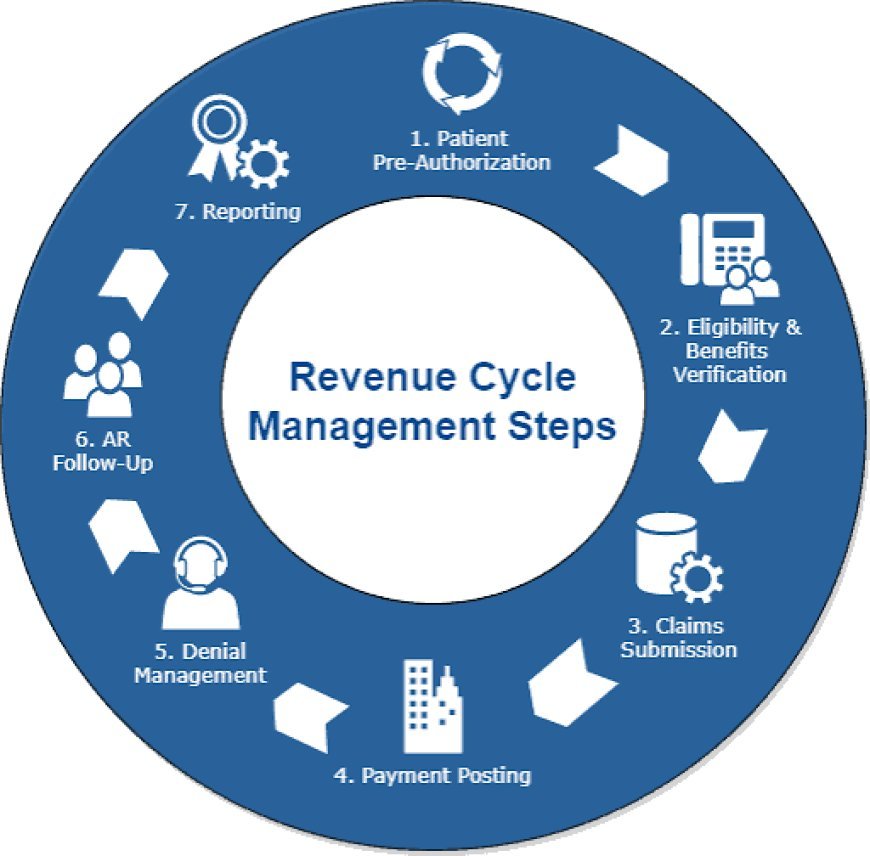
To eliminate medical claim denials and protect net patient revenue, healthcare organizations must transition from reactive denial management to proactive, front-end denial prevention. Implementing advanced revenue cycle management (RCM) strategies—including real-time eligibility parsing, clinical documentation improvement (CDI), automated claim scrubbing, structured appeal workflows, and predictive analytics—allows practices and health systems to achieve clean claim rates above 98% while reducing overall cost-to-collect.
Deep-Dive Context & Fundamental Analysis
Medical claim denials represent one of the single largest drains on healthcare operational margins in the United States. According to industry benchmarks from the Healthcare Financial Management Association (HFMA), the average cost to rework a single denied claim ranges from $25 to $118 depending on provider size and specialty—consuming billions in administrative overhead annually.
+-----------------------------------------------------------------------------------+
|                     THE END-TO-END RCM FINANCIAL PIPELINE                         |
+-----------------------------------------------------------------------------------+
| 1. FRONT-END ACCESS    2. MID-CYCLE CODING     3. BACK-END BILLING   4. ANALYTICS   |
| Patient Intake      -> Clinical Doc (CDI)  -> Claim Scrubbing   -> Root-Cause     |
| Real-Time EDI 270      ICD-10 / CPT / HCPCS   ANSI X12 837 Out     Prevention     |
| Clearance Gate         Medical Necessity      Remit X12 835 In       Feedback Loop |
+-----------------------------------------------------------------------------------+
Key Terms and Technical Mechanics
- Clean Claim Rate (CCR): The percentage of claims submitted to payers that are accepted and processed for payment on the first pass, without requiring manual intervention or additional documentation. Benchmark target: ≥98%.
- Initial Denial Rate: The ratio of claims rejected or denied by payers upon initial submission relative to total claims billed. Target benchmark: <5%.
- ANSI X12 837 & 835 Transactions: The standard electronic formats for healthcare claims submission (837I for institutional, 837P for professional) and Electronic Remittance Advice (835 ERA) detailing payment or denial explanations via Standard Claim Adjustment Reason Codes (CARCs) and Remittance Advice Remark Codes (RARCs).
- Hard Denial vs. Soft Denial: A soft denial is an initial rejection (e.g., missing subscriber ID digit) that can be corrected and resubmitted for full payment. A hard denial (e.g., service non-covered, post-filing limit expiration) results in a write-off unless successfully appealed with contractual or clinical backing.
Real-World Application Scenario
A 15-physician gastroenterology group experiences a sudden spike in its initial denial rate from 4.2% to 11.8%, causing cash flow delays of over $320,000 per month.
Analysis reveals that 65% of the denials cite CARC 197 (Precertification/authorization/notification absent). The clinical staff was performing outpatient colonoscopies (CPT 45378) and biopsies (CPT 45380), but intake coordinators were relying on generic eligibility confirmations that failed to account for individual commercial plan changes requiring pre-procedure notification for diagnostic procedures.
By deploying an automated pre-service rule engine that flags specific CPT/ICD-10 combinations requiring pre-authorization at the time of scheduling, the practice eliminates the root cause within 30 days, restoring its clean claim rate to 98.4% and recovering delayed cash flow.
Step-by-Step Implementation: 5 Strategic Hacks to Stop Claim Denials
Transforming revenue cycle operations requires systematic changes across the entire patient encounter lifecycle.
       +-------------------------------------------------------+
       | HACK 1: Deploy Real-Time Front-End Coverage Verification|
       +-------------------------------------------------------+
                                   |
                                   v
       +-------------------------------------------------------+
       | HACK 2: Implement Concurrent Clinical Doc Improvement |
       +-------------------------------------------------------+
                                   |
                                   v
       +-------------------------------------------------------+
       | HACK 3: Customize Automated Claim Scrubber Rules       |
       +-------------------------------------------------------+
                                   |
                                   v
       +-------------------------------------------------------+
       | HACK 4: Establish Root-Cause CARC/RARC Triage System   |
       +-------------------------------------------------------+
                                   |
                                   v
       +-------------------------------------------------------+
       | HACK 5: Deploy Predictive Analytics & Appeals Autom.  |
       +-------------------------------------------------------+
Hack 1: Deploy Real-Time Front-End Coverage Verification Gates
Over 40% of all medical claim denials stem from front-end administrative errors made before the patient ever sees a provider.
- Execution: Mandate real-time ANSI X12 270/271 eligibility inquiries executed automatically at scheduling, 48 hours prior to service, and at check-in.
- Rule Engine Layer: Ensure your practice management (PM) software parses the X12 271 payload down to the line-item level. Generic "Active Coverage" flags are insufficient; the system must verify specific benefit coverage, secondary coverage hierarchy (COB), deductible status, copays, and required authorization flags for the scheduled CPT codes.
- Operational Gate: Implement a strict rule in your EHR: encounters missing active, line-item verified eligibility status cannot be checked in without administrative supervisor override.
Hack 2: Institute Concurrent Clinical Documentation Improvement (CDI)
Coding denials frequently result from clinical documentation that lacks the specificity required to support medical necessity under modern ICD-10-CM guidelines and Local Coverage Determinations (LCDs).
- Execution: Shift CDI reviews from post-discharge retrospective audits to concurrent, real-time documentation checks while the patient encounter is active.
- EHR Template Optimization: Configure EHR clinical templates to compel providers to document mandatory medical necessity elements (e.g., duration of conservative therapy, specific functional impairments, diagnostic imaging results) before closing chart notes.
- Automated Specificity Prompts: Use embedded clinical decision support (CDS) tools that prompt physicians for unspecified ICD-10 codes (e.g., prompting for specific lateralities, acute vs. chronic stages, or underlying etiology).
Hack 3: Build Custom Clearinghouse Scrubbing Rules by Payer
Standard clearinghouse claim scrubbers only validate baseline HIPAA syntax rules. To stop denials, providers must build custom, payer-specific rules based on historical payment data.
- Execution: Perform a quarterly audit of 835 ERA files to identify local payer billing quirks (e.g., specific modifier requirements such as Modifier 25, 59, or XE/XS/XP/XU).
- Custom Rule Creation: Program custom claim scrubbing logic into your billing system prior to X12 837 generation. For example:
- Rule 1: If Payer = Aetna AND CPT = 99214 + 11100, REQUIRE Modifier 25 attached to 99214 AND verify diagnosis pointers are distinct.
- Rule 2: If Service Location = Ambulatory Surgical Center (POS 24), ENSURE national provider identifier (NPI) taxonomy matches facility billing specs.
- Pre-Submission Validation: Run all claims through this secondary custom rule engine before transmitting to clearinghouses.
Hack 4: Establish a Root-Cause CARC/RARC Triage & Appeal Pipeline
When denials occur, treating them as individual one-off billing tasks guarantees they will recur. Organizations must triage denials based on standard adjustment codes.
- Execution: Automatically parse incoming ANSI X12 835 ERA files and map combinations of Claim Adjustment Reason Codes (CARCs) and Remittance Advice Remark Codes (RARCs) into structured categories:
- Group A (Demographic/Eligibility): Reroute automatically to Registration/Intake team for dynamic correction.
- Group B (Coding/Modifiers): Route to Certified Professional Coders (CPCs) for immediate documentation cross-referencing.
- Group C (Medical Necessity/Authorization): Reroute to Clinical Appeals Specialists with Templated Appeals Frameworks.
- Root-Cause Feedback Loop: Hold weekly cross-functional meetings between intake, coding, and billing leads to adjust front-end controls based on top denial codes from the preceding 7 days.
Hack 5: Leverage Predictive Analytics and Appeals Automation
Traditional appeals processes rely on manual letter drafting, resulting in high administrative costs and missed timely filing deadlines.
- Execution: Implement predictive machine learning models that analyze historical claim data to calculate the statistical probability of a claim denial before submission.
- Automated Appeals Workflow: For denied claims, deploy automated workflow engines that pre-populate appeal templates with required clinical chart notes, original authorization tracking numbers, and relevant LCD/NCD guidelines.
- Timely Filing Alerts: Establish automated flags for timely filing limits (which vary from 30 days for some commercial payers to 365 days for traditional Medicare) to ensure zero write-offs due to contractual filing expirations.
Strategic Evaluation: Internal Optimization vs. Specialized External RCM
Healthcare organizations must evaluate whether to build and maintain advanced denial prevention workflows in-house or partner with specialized external RCM vendors.
| Strategic Metric | Internal In-House RCM | Hybrid Model (Co-Sourced) | Fully Managed External RCM Partner |
|---|---|---|---|
| Average Clean Claim Rate | 88% – 93% | 94% – 97% | 98%+ |
| Capital & Tech Investment | High (software licenses, rule engine dev, CDI software) | Moderate (shared software footprint) | Low (technology stack included in fee) |
| Payer Rule Engine Maintenance | High internal FTE overhead; slow to adapt to updates | Shared responsibility | Continuous automated updates by vendor |
| Scalability & Staff Turnover Risk | High risk (loss of CPCs/billers halts cash flow) | Low risk | Zero internal staffing risk |
| Cost-to-Collect Ratio | 6% – 10% of net collections | 4% – 6% of net collections | 3% – 5% performance-based fee |
Decision Framework
- Choose In-House RCM if: Your health system possesses dedicated RCM IT resources, maintains a stable certified coding team, operates an integrated EHR/clearinghouse stack, and consistently maintains a clean claim rate above 95%.
- Choose Fully Managed RCM if: Your organization struggles with staff turnover, experiences initial denial rates exceeding 6%, lacks the IT infrastructure to write custom clearinghouse rules, or faces rising cost-to-collect margins.
Expert Guidance, Pitfalls & Risk Mitigation
Critical Revenue Cycle Mistakes to Avoid
-
Writing Off "Small-Balance" Denials
- The Danger: Many practices establish automated write-off thresholds for denied claims under $100. Payers recognize these patterns and systematically deny low-dollar line items (e.g., rapid lab tests, minor procedures), eroding net collections over time.
- Mitigation: Implement automated batching software that aggregates small-balance denials by payer and root cause, allowing billers to submit single, high-volume bulk appeals.
-
Neglecting Timely Filing Windows on Resubmissions
- The Danger: Treating a denied claim as an open-ended project frequently results in missing the payer's timely filing limit for appeals or corrections (e.g., 60 days from ERA date).
- Mitigation: Configure your billing system to set an automated 14-day appeal clock from the moment an X12 835 ERA containing a denial is ingested.
-
Failing to Audit Payer Compliance with Contracted Rates
- The Danger: Payers sometimes underpay or inappropriately apply administrative fee adjustments that mirror denials.
- Mitigation: Upload fee schedules into your PM platform and run automated contract variance reporting on 835 ERA payments to flag underpayments alongside standard denials.
Future-Proof Recommendations & Next Steps
The healthcare revenue cycle is moving toward automated, real-time settlement models driven by regulatory changes and AI adoption.
Key Regulatory Frameworks Shaping RCM
- CMS-0057-F Final Rule: Mandates that Medicare Advantage plans, state Medicaid agencies, and CHIP entities implement standardized HL7 FHIR APIs for prior authorization by 2027, capping decision turnaround times at 72 hours for urgent requests and 7 days for standard requests.
- No Surprises Act (NSA) Compliance: Requires strict accuracy in good faith estimates (GFEs) and out-of-network provider billing, making front-end eligibility and price transparency workflows mandatory for regulatory compliance.
Action Plan for Practice Administrators & CFOs
- Conduct a 90-Day Denial Audit: Map all initial denials from the past quarter to specific CARC/RARC codes and calculate your exact Clean Claim Rate and Cost-to-Collect.
- Audit Front-End Eligibility Interfaces: Ensure your patient registration interface executes automated line-item X12 271 eligibility parsing at intake.
- Upgrade Clearinghouse Rule Sets: Implement at least 10 custom, payer-specific claim-scrubbing rules based on your top 3 denial categories.
- Evaluate AI & Automation Tools: Explore automated appeals software and predictive denial tools to lower administrative costs and accelerate cash flow.
FAQs
What is the ideal clean claim rate for a healthcare practice?
The industry gold standard clean claim rate is 98% or higher. Achieving this benchmark indicates that front-end registration, clinical documentation, coding, and claim scrubbing processes are operating with minimal error, ensuring predictable cash flow and low administrative cost-to-collect.
What are CARC and RARC codes in revenue cycle management?
Claim Adjustment Reason Codes (CARCs) explain why a claim or service line was adjusted or denied payment by a payer (e.g., CARC 16: Claim/service lacks information). Remittance Advice Remark Codes (RARCs) provide additional context or detailed guidance regarding the adjustment (e.g., RARC N382: Missing/incomplete/invalid patient identifier). Together, they allow billers to identify root causes and file targeted appeals.
How does real-time eligibility verification reduce claim denials?
Real-time eligibility verification uses ANSI X12 270/271 transactions to confirm patient coverage, active benefit dates, copays, deductibles, and secondary coverage before services are rendered. This eliminates front-end administrative denials caused by terminated policies, incorrect subscriber IDs, or out-of-network status.
What is the difference between a claim rejection and a claim denial?
A claim rejection occurs at the clearinghouse or payer gateway level before the claim enters the processing system, typically due to formatting, syntax, or demographic errors (e.g., invalid NPI or missing zip code). Rejections are not formally adjudicated. A claim denial occurs after adjudication, where the payer processes the claim and determines that it cannot be paid due to coverage, coding, or clinical policy reasons.
How can automation reduce the cost of managing claim denials?
Automation streamlines the ingestion of ANSI X12 835 remittance files, automatically categorizes denials by CARC/RARC codes, populates appeal letters with required clinical documentation, and tracks filing deadlines. This reduces manual staff rework time, accelerates turnaround times, and prevents write-offs caused by missed appeal windows.
What's Your Reaction?
 Like
0
Like
0
 Dislike
0
Dislike
0
 Love
0
Love
0
 Funny
0
Funny
0
 Angry
0
Angry
0
 Sad
0
Sad
0
 Wow
0
Wow
0