























Anti-Wear Additives: How They Protect Moving Engine Parts

An engine operates on the motion of surfaces in response to pressure, heat, and friction. Engine oil forms a protective coating; however, the coating may thin during cold starts, high loads, and high temperatures. Here is where anti-wear additives help restrain metal-on-metal contact, reduce surface damage, and promote engine dependability.
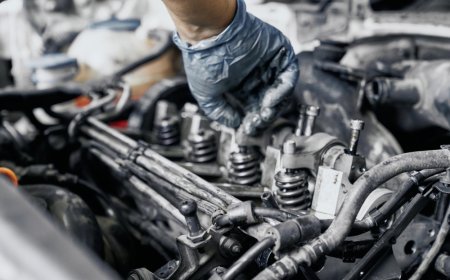
Modern engine oil additives cover the camshafts, valve trains, bearings, and piston rings, and keep the oil at the required performance level. Nonetheless, the outcomes depend on the full formulation, engine design, and operating conditions.
What Are Anti-Wear Additives?
Anti-wear additives are substances added to lubricating oil to curtail wear when the lubricating oil film is so thin that it cannot fully separate moving surfaces. In usual circumstances, metal components are separated by oil. However, microscopic contact can occur during start-up or under high-pressure operation.
When this occurs, the compounds react or bind onto the metal, forming a thin protective coating. This leads to reduced direct friction on surfaces and a reduced risk of scratches, scuffing, and material loss. These are a subset of a broader bundle of lubricant additives, including detergents, dispersants, antioxidants, viscosity modifiers, and corrosion inhibitors.
How the Protective Film Works
This coating, commonly referred to as a tribofilm, forms in areas where pressure and temperature promote interactions between additives and the metal. It is sacrificial: it erodes rather than the surface of the underlying engine. Thus, it can be used in cases of temporary inadequacy of the main oil film.
Why Do Moving Engine Parts Need Extra Protection?
The engine’s condition is in flux. A car can be started in cold weather, accelerate under load, idle in a traffic jam, and then accelerate to highway speed. All conditions influence the flow of oil, temperature, pressure, and film thickness.
When the engine is cold, it may take some time for the oil to reach all parts. In the meantime, the contact pressure is high in cam lobes and valve lifters. Viscosity can be reduced at high temperatures, and the film can be squeezed under heavy loads. As a result, wear risk will increase when the lubrication is put to the test.
Of particular importance in anti-wear chemistry are those components that slide against each other. But it cannot be used as a compensatory measure for poor maintenance, low oil content, or the wrong viscosity grade.
Which Anti-Wear Compounds Are Commonly Used?
The compounds are chosen by the formulators based on engine requirements, performance, and compatibility. Modern lubricants contain three typical chemistries.
Zinc Dialkyldithiophosphate (ZDDP)
ZDDP is a popular anti-wear compound. It creates a zinc- and phosphorus-enhanced protective film under heat and pressure that helps minimize wear on heavily loaded surfaces, especially valve-train parts.
The level of ZDDP, however, has to be regulated, as excessive phosphorus can affect catalytic emission-control systems. The modern oils thus fulfill industry and vehicle-maker demands rather than merely concentrating additives to the maximum.
Molybdenum-Based Compounds
Some molybdenum compounds help reduce friction and provide wear protection. They can either create low-friction films or collaborate with other components to enable easier functioning in appropriate formulas.
However, molybdenum compounds cannot be substituted for ZDDP; their performance varies with the base oil, formulation, and engine conditions.
Boron-Based Chemistry
Boron compounds can be used to enhance wear protection, oxidation, or deposit control. Moreover, a few of them are combined with other components; thus, their value will depend on the package.
How Do Anti-Wear Additives Work with Other Oil Ingredients?
Engine protection needs various functions. Detergents control deposits on hot surfaces, and dispersants keep contaminants in suspension until an oil change. Antioxidants retard oxidation; corrosion inhibitors prevent the attack of metal by chemicals.
These ingredients should not interact adversely with each other. Hence, pick lubricant additives to meet the test formulation’s needs. To illustrate, enhancing a single property can influence the seal compatibility, catalyst protection, or the performance of another ingredient. Thus, the whole blend is tested by formulators.
A good motor oil additive package balances wear control, cleanliness, oxidation resistance, foam control, and stability and viscosity. Oil has already been designed to comply with modern requirements; thus, additional product might not be essential and might upset the equilibrium. The appropriate lubricant additives must be used as part of a proven system. An appropriate motor oil additive is application-specific.
What Affects Anti-Wear Performance?
The performance of anti-wear additives is based on practical considerations. To start with, the viscosity grade should be the one recommended by car manufacturers. Circulation and film strength could be impaired if the oil is too thick or too thin.
Second, select an oil that meets the required API, ILSAC, ACEA, or manufacturer specifications. Moreover, service according to the schedule and fit the appropriate filter. Deteriorated, unsanitary, or inadequate oil cannot offer reliable coverage.
The road conditions are important as well. Short journeys, towing, dust, stop-start traffic, and extreme temperatures are some additional burdens on oil. In line with this, adhere to the vehicle maker’s severe-service recommendations where necessary.
Should You Add an Aftermarket Anti-Wear Product?
Oil that is properly defined already has balanced engine oil additives. Thus, an additional bottle is not necessary unless the manufacturer or an authorized expert prescribes it.
Review the technical data for a motor oil additive and its compatibility with the required specification before use. Instead of repairing the worn parts or eliminating all friction, avoid products that claim to do so. There are no additives that will mend damaged metal, fix mechanical flaws, or replace servicing.
How to Choose the Right Lubricant
Use the owner’s manual to select oil, not an additive label. Ensure the viscosity grade and performance category are correct, and do not blend products unless there is a technical justification.
For fleet operators, a uniform product choice can streamline the servicing process and minimize specification errors. Besides, abnormal oil usage, contamination, or wear patterns can be detected early by the maintenance records. Consider the technical data and application approvals when selecting lubricant additives, but not general marketing statements. Reputable suppliers of engine oil additives should provide clear information about their products.
Conclusion
Anti-wear additives enhance protection of moving engine parts by maintaining a thin film on surfaces where normal lubrication is inadequate. Consequently, they help reduce scuffing and wear. This can be attributed to ZDDP, molybdenum compounds, and the choice of boron chemistries, although their contributions differ.
Finally, an effective defense would be a properly formulated lubricant that meets the manufacturer’s specifications. Select the right oil, do not exceed service intervals, and add additional products only when needed and compatible. Not just an increased additive concentration; a balanced formulation provides reliable protection.
What's Your Reaction?
 Like
0
 Dislike
0
 Love
0
 Funny
0
 Angry
0
 Sad
0
 Wow
0