

















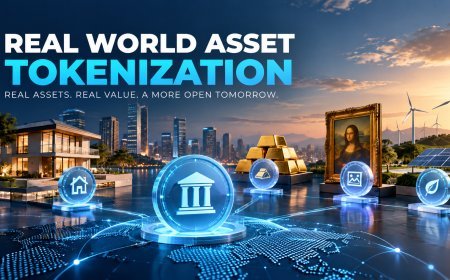



Real-World Asset Tokenization: Exploring New Models for Cross-Border Capital
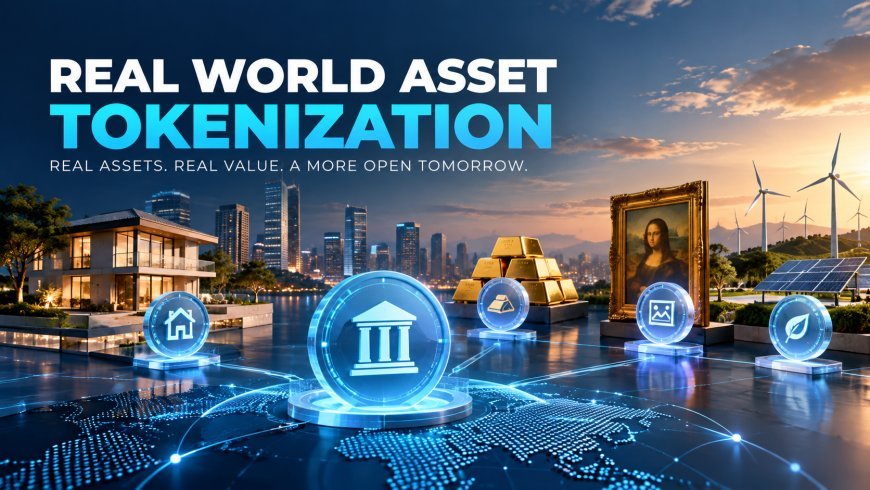
Capital has traditionally moved across borders through banks, investment funds, brokers, and other financial intermediaries. Although these systems support international investments, they can involve complex documentation, multiple intermediaries, currency conversion, and lengthy settlement processes. Real-world asset (RWA) tokenization is introducing alternative approaches by representing ownership interests or financial rights connected to physical and traditional financial assets as digital tokens on a blockchain.
From real estate and private credit to commodities and infrastructure projects, tokenization is creating opportunities to rethink how assets attract capital from international investors. By combining blockchain infrastructure with established financial structures, businesses can explore new ways to connect asset owners with global capital markets.
What Is Real-World Asset Tokenization?
Real-world asset tokenization is the process of representing rights associated with tangible or financial assets through digital tokens. These tokens can represent ownership interests, claims to income, debt obligations, or other contractual rights, depending on the asset's legal structure.
For example, a commercial property owner in the United Kingdom may want to raise capital from investors in several countries. Instead of relying exclusively on traditional investment structures, the owner could establish a legally compliant investment vehicle and issue digital tokens representing eligible interests in that vehicle.
Investors who meet the applicable eligibility requirements could acquire these tokens through a suitable platform. Blockchain-based records can help manage token transfers, ownership records, and certain investment-related processes.
However, the tokens do not automatically provide direct ownership of the underlying asset. Their legal meaning depends on the offering documents, governing law, and rights attached to the investment.
How Tokenization Creates New Models for Cross-Border Capital
1. Fractional Investment Across Markets
Traditional investments in assets such as commercial property, infrastructure, and private businesses may require substantial capital commitments. Tokenization can divide eligible investment interests into smaller units, potentially allowing a broader range of qualified investors to participate.
Consider an infrastructure project seeking $10 million in funding. A tokenized offering could divide eligible interests into smaller investment units, subject to applicable regulations and minimum investment requirements.
This structure may help project owners approach investors across multiple jurisdictions rather than depending entirely on a single domestic funding source. Fractionalization does not eliminate investment risk or guarantee that smaller units will be available to every investor.
2. Digital Infrastructure for International Investment
Cross-border investments often involve separate systems for investor onboarding, payment processing, asset records, compliance checks, and settlement. Coordinating these processes can increase administrative complexity.
A tokenization platform can bring selected functions into a more connected digital environment. Depending on its design, the platform may support identity verification, investor eligibility checks, token issuance, transaction monitoring, and ownership record management.
Smart contracts can automate predefined actions, such as allocating tokens after specified conditions are met. Nevertheless, blockchain automation does not replace legal review, regulatory reporting, or the involvement of financial institutions where required.
3. New Funding Channels for Private Assets
Private credit, trade finance, real estate, and infrastructure projects frequently depend on specialized investors and established funding networks. Tokenization may provide another channel through which these assets can reach eligible investors internationally.
For example, a company exporting agricultural products might need financing while waiting for buyers to settle outstanding invoices. A properly structured tokenized receivables arrangement could represent eligible claims or investment interests linked to those receivables.
Investors could evaluate the opportunity based on the debtor's creditworthiness, payment terms, legal enforceability, and expected returns. The token provides a digital representation of the relevant rights, while the underlying commercial agreement determines the actual claim.
Industries Exploring Cross-Border RWA Tokenization
Several asset categories offer potential applications for international capital formation.
-
Real estate: Property investment structures can provide access to eligible investors in different markets, subject to ownership laws and securities regulations.
-
Private credit: Tokenized investment interests may help connect borrowers and lenders through digital issuance and administration systems.
-
Trade finance: Receivables and other eligible trade-related claims can be represented digitally to support alternative financing arrangements.
-
Commodities: Gold and other commodities may be linked to tokens representing defined ownership or contractual claims, provided custody and redemption arrangements are established.
-
Infrastructure: Renewable energy facilities, transportation projects, and other infrastructure assets may explore tokenized financing structures to reach international capital providers.
Each category presents different legal, operational, valuation, and risk considerations. A model suitable for a commodity-backed token may not work for a property investment or private-credit instrument.
The Role of Compliance in Cross-Border Tokenization
International capital formation requires more than deploying tokens on a blockchain. Businesses must understand the regulatory requirements of the jurisdictions where assets are located, offerings are made, and investors reside.
Key considerations include securities classification, investor accreditation or eligibility, anti-money laundering requirements, know-your-customer procedures, taxation, data protection, and restrictions on cross-border transfers.
For instance, an asset issuer based in one country may face different obligations when offering investment interests to investors in another country. The issuer must determine whether the offering is permitted, what disclosures are required, and whether restrictions apply to resale or secondary-market trading.
Legal structures also need to establish how token holders exercise their rights. These may include rights to income, voting, redemption, or repayment. Clear documentation is essential to ensure that digital records align with enforceable legal agreements.
Technology Supporting Cross-Border Capital Models
A reliable RWA tokenization platform generally combines several technical components.
Smart contracts manage token issuance, transfer conditions, and other predefined rules. Digital identity and compliance systems support investor verification and eligibility checks. Wallet infrastructure allows users to hold and transfer supported digital assets. Asset management tools help issuers maintain records, distribute eligible payments, and monitor investment activity.
Interoperability is another important consideration. Investors and institutions may use different blockchain networks and financial systems, making compatible infrastructure valuable. However, cross-chain transfers introduce additional technical and operational risks and must preserve the legal and compliance restrictions attached to the asset.
Businesses evaluating development partners, including companies such as INORU, can assess whether their proposed solutions address the complete investment lifecycle, from asset structuring and token issuance to investor management and ongoing administration.
Challenges That Could Shape Adoption
Despite its potential, RWA tokenization faces several obstacles. Regulatory requirements vary between jurisdictions, and legal recognition of tokenized rights is not uniform. Secondary-market liquidity may remain limited when there are few eligible buyers or restrictions on transfers.
Valuation and asset verification are equally important. Blockchain records can document transactions, but they cannot independently confirm that an underlying property exists, a commodity is properly stored, or a receivable will be paid.
Currency fluctuations, custody arrangements, cybersecurity threats, and differences in investor protection can also affect international offerings. Addressing these issues requires coordination among asset owners, legal advisers, custodians, technology providers, and financial institutions.
Conclusion
Real-world asset tokenization is creating new possibilities for connecting traditional assets with international capital. Fractional investment structures, digital issuance processes, and programmable transaction rules may help businesses explore alternative funding channels across real estate, private credit, commodities, trade finance, and infrastructure.
Its long-term success, however, will depend on more than blockchain adoption. Clear legal rights, robust compliance, trustworthy asset verification, investor protection, and sustainable market demand will determine whether tokenized investment structures can operate effectively across borders.
As financial institutions and asset owners continue to explore these models, RWA tokenization may become an additional component of global capital markets, complementing rather than automatically replacing established investment and financing systems.
What's Your Reaction?
 Like
0
 Dislike
0
 Love
0
 Funny
0
 Angry
0
 Sad
0
 Wow
0